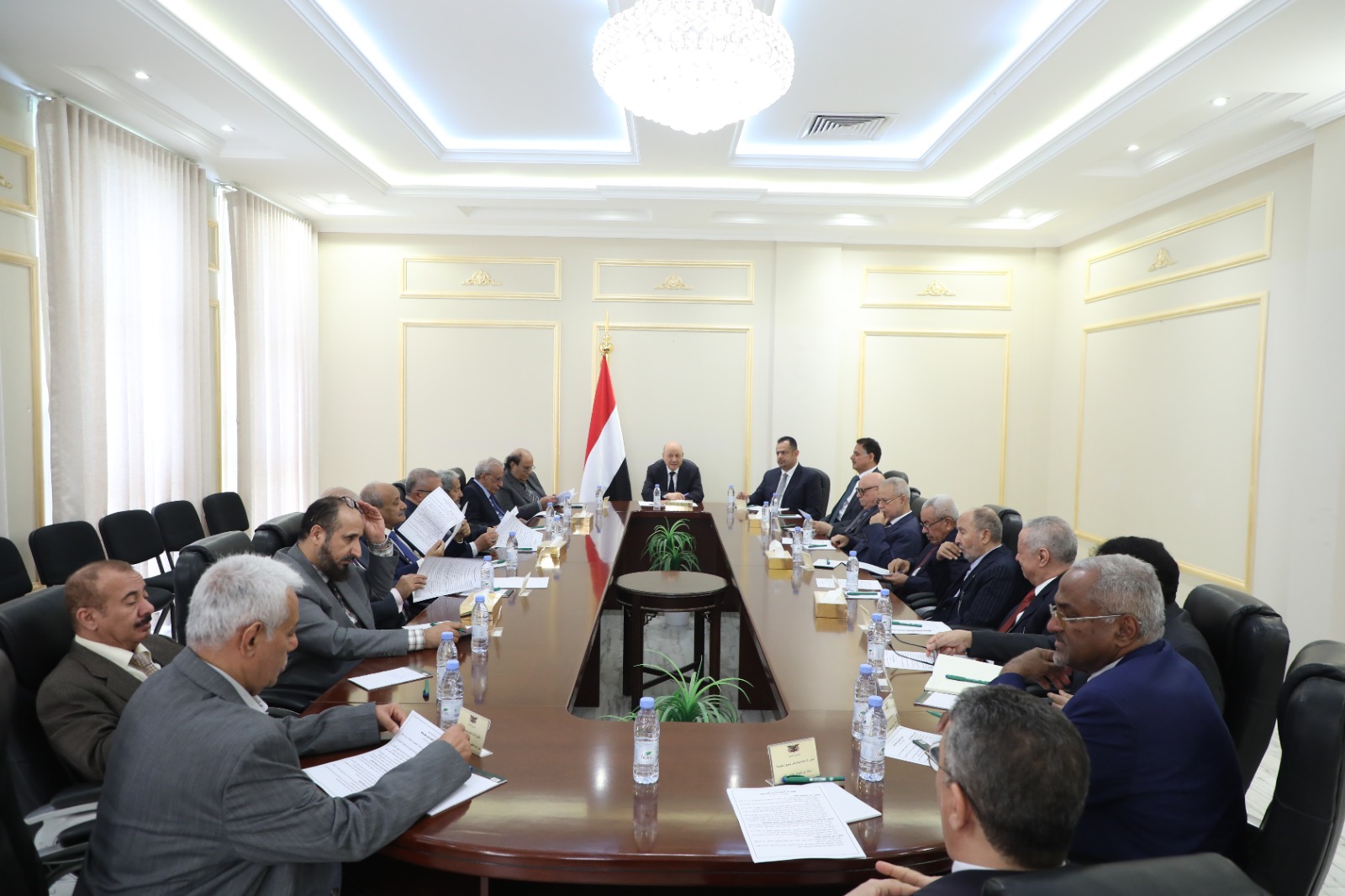
President Al-Alimi Highly Praises Continued Saudi–Emirati Mediation Efforts to De-escalate Tensions in Eastern Governorates
Riyadh
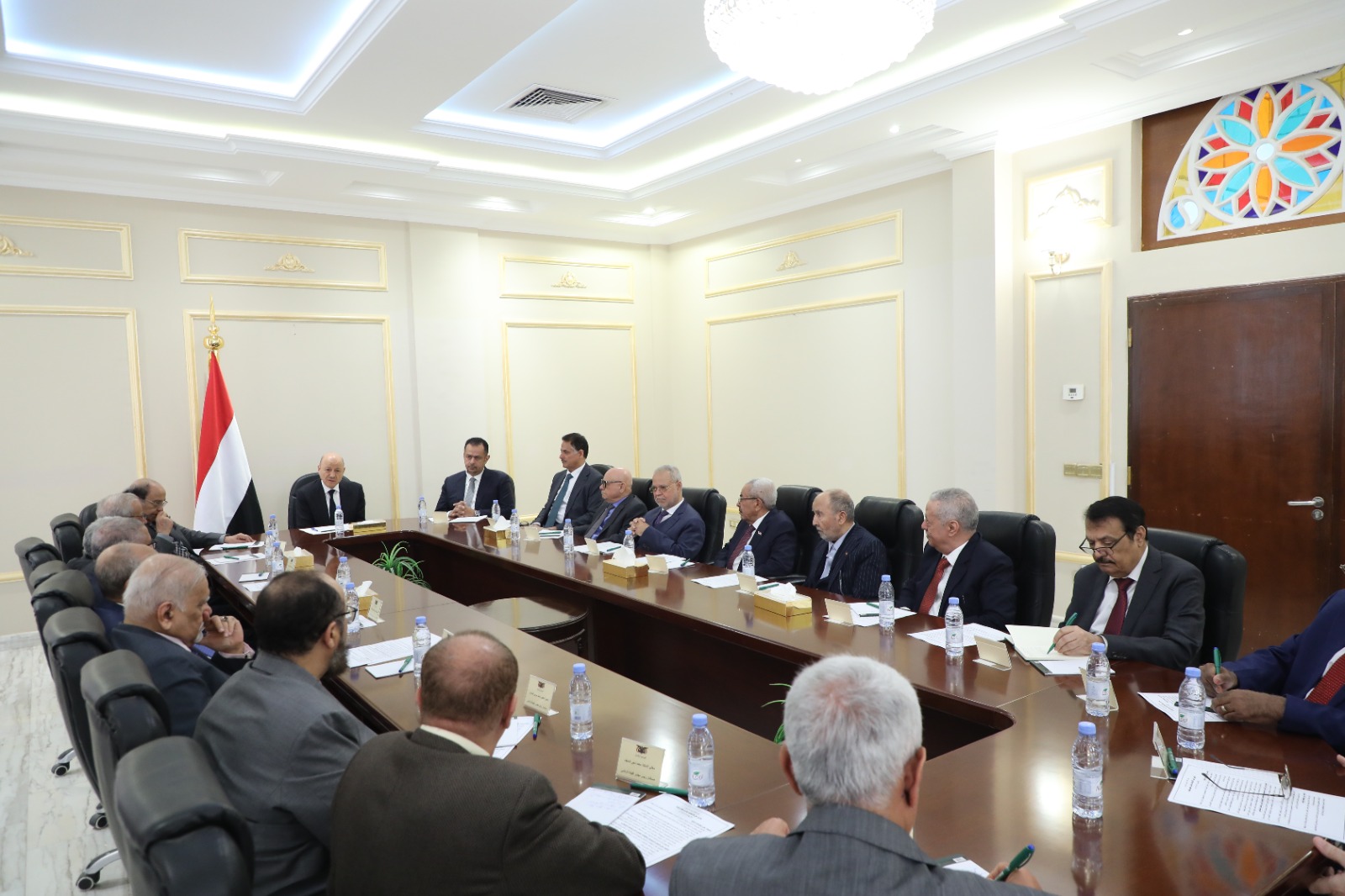
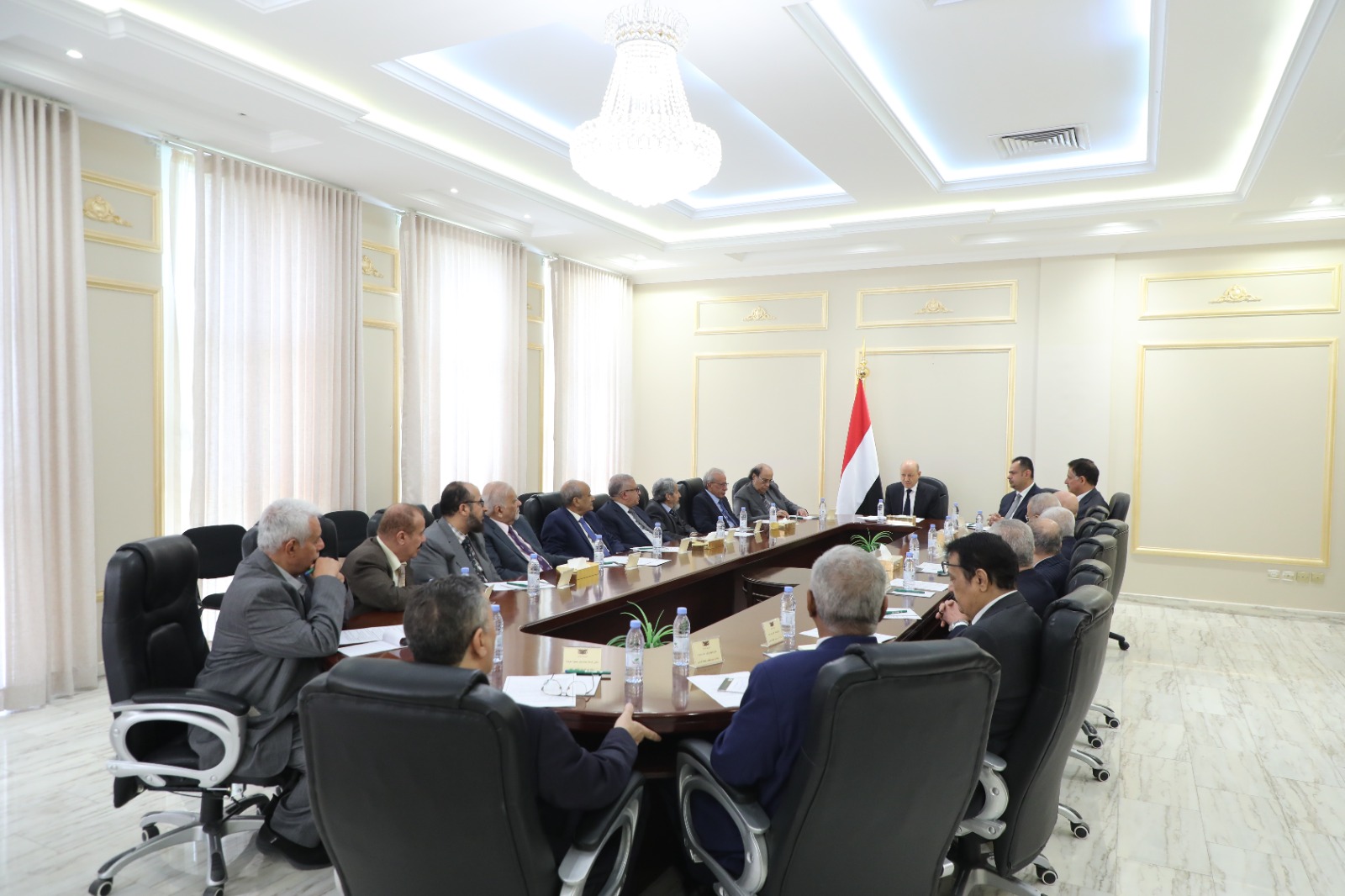
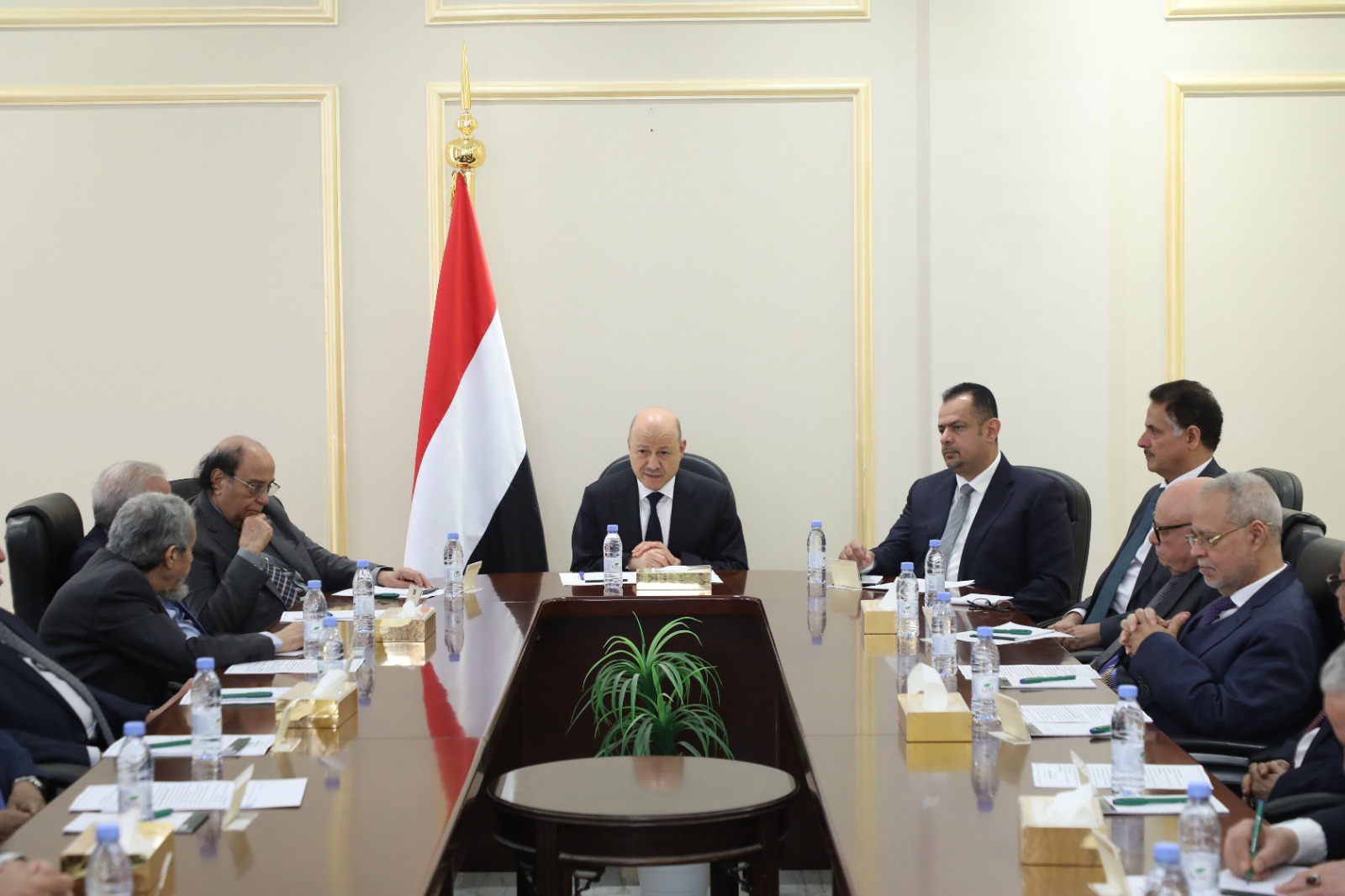
His Excellency President Dr. Rashad Mohammed Al-Alimi, President of the Presidential Leadership Council (PLC), met today, Saturday, with the Advisory Body to review the latest developments in Hadhramaut and Al-Mahra governorates. The meeting also discussed the Saudi–Emirati mediation efforts aimed at protecting civilians and ensuring the withdrawal of armed elements affiliated with the Southern Transitional Council (STC) from the two governorates.
The President commended the efforts of the Advisory Body during the past period and its anticipated role in formulating an inclusive national vision to safeguard the existing consensus and state institutions, in accordance with the Constitution, the law, and the references of the transitional phase—foremost among them the Declaration of the Transfer of Power and the Riyadh Agreement.
President Al-Alimi briefed the Advisory Body on developments in the eastern governorates. He noted that the state had dealt with a high sense of responsibility with the dangerous escalation imposed by the STC’s military movements, which sought to impose a fait accompli by force and undermine the references of the transitional phase.
The President addressed the escalation path pursued by the STC in Hadhramaut Governorate, which has expanded to the districts of Ghayl Bin Yamin, Al-Shaher, and Ad-Dis Al-Sharqiyah. He stressed that what is taking place cannot be described as a political dispute, but rather as a gradual course of unilateral measures that began with administrative decisions and then shifted to military movements and rebellion against the nationally, regionally, and internationally agreed transitional references.
He pointed out that claims of combating terrorism have been used as a pretext to alter the balance of control on the ground, emphasizing that counterterrorism is an exclusive responsibility of the state and its official institutions. Any actions outside this framework, he said, do not curb extremism but instead serve it and open the door to serious security vacuums.
The President also addressed the humanitarian violations accompanying the escalation. He explained that field and human rights reports confirm civilian casualties, attacks on public and private property, threats to social peace and cohesion in Hadhramaut and Al-Mahra, in addition to undermining the legal standing of the Yemeni state.
In this context, the President reviewed the outcomes of the National Defense Council meeting, which concluded with a clear characterization of the escalation as a blatant breach of the transitional references and a rebellion against legitimate state institutions. His Excellency reaffirmed the state’s duty to protect civilians, impose de-escalation, and prevent further bloodshed.
He stated that, pursuant to the recommendations of the National Defense Council, the political leadership submitted an official request to the Coalition to Support Legitimacy to take immediate measures to protect civilians in Hadhramaut. A request to which the Joint Forces Command responded promptly, in a bid to spare bloodshed and restore normal conditions.
Based on this joint coordination, the President added, any military movements that contravene de-escalation efforts or endanger civilians will be dealt with directly, with the aim of protecting lives. He said this approach is intended to ensure the success of the joint efforts of the Kingdom of Saudi Arabia and the United Arab Emirates, secure the withdrawal of STC forces from camps in Hadhramaut and Al-Mahra, hand them over to the National Shield Forces, and enable local authorities to exercise their constitutional and legal powers.
President Al-Alimi renewed his full support for the mediation efforts led by the Kingdom of Saudi Arabia and the United Arab Emirates to de-escalate tensions in the eastern governorates. He highly praised the pioneering role of the two brotherly countries in supporting the Yemeni people and their political leadership, alleviating humanitarian suffering, and achieving aspirations for security, stability, and peace.
He also highly commended the remarks of His Royal Highness Prince Khalid bin Salman, Saudi Minister of Defense, describing them as reflecting a sincere fraternal commitment to Yemen’s stability and its people’s aspirations to restore state institutions.
He said the remarks embody the Kingdom’s strong commitment to supporting Yemen, its unity, stability, and territorial integrity.
The President stressed that resolving the Southern Issue will remain a firm commitment of the state, as a just cause with historical and social dimensions, and that addressing it must be pursued through consensus and confidence-building. He warned that reckless unilateral actions serve only the common enemy and harm the Southern Issue itself.
The meeting underscored the importance of keeping channels of communication open with all political components in order to promote dialogue, favor peace, and uphold the supreme national interest. It also stressed the need to align with the references of the transitional phase and the de-escalation efforts led by the Kingdom of Saudi Arabia and the United Arab Emirates, aimed at preserving unity, restoring state institutions, alleviating citizens’ suffering across all governorates, and mobilizing all energies to confront the Houthi terrorist militias backed by the Iranian regime.
The meeting was attended by Dr. Yahya Al-Shuaibi, Director of the Office of the Presidency.
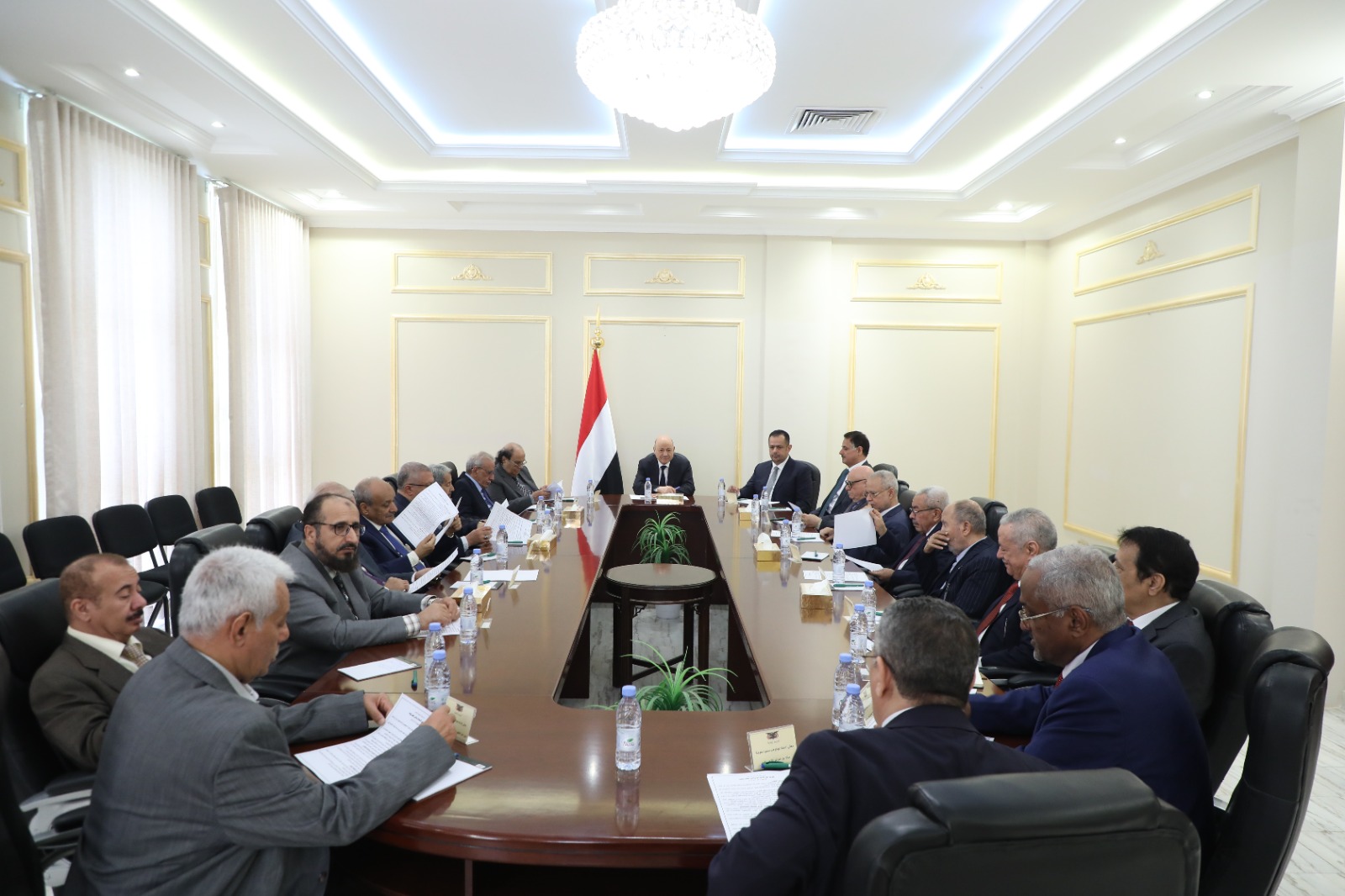

PLC President: Decision to End Houthi Terrorism Is in Force and Irreversible
President Dr. Rashad Al-Alimi, President of the Presidential Leadership Council (PLC), affirmed that “Dawn of Yemen” Operation is proceeding toward its ultimate goal

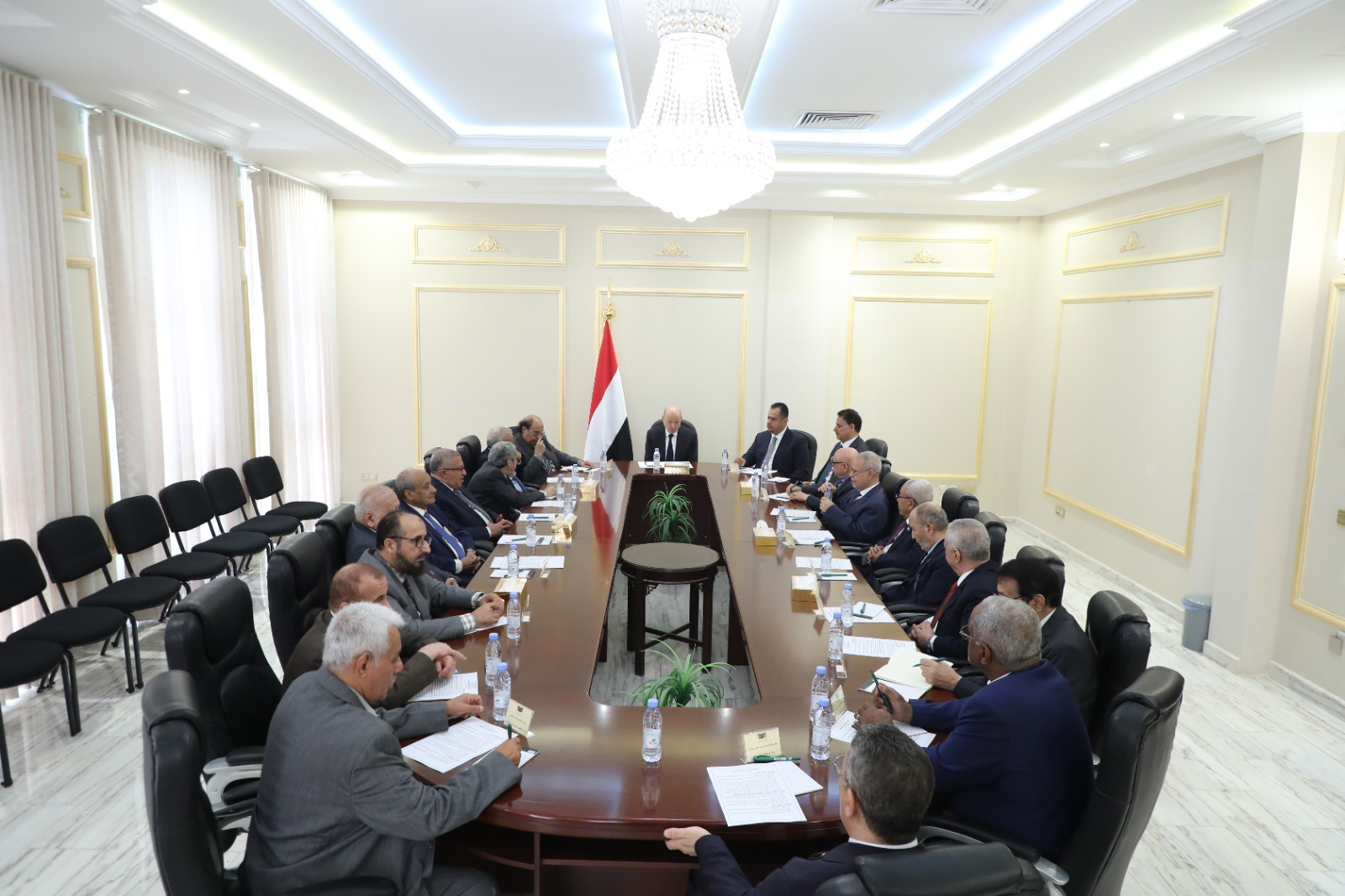
PLC Warns Against Espionage and Cooperation with Houthis, Orders Pursuit of Those Involved
Tue ، 13 Oct 2026 05:49

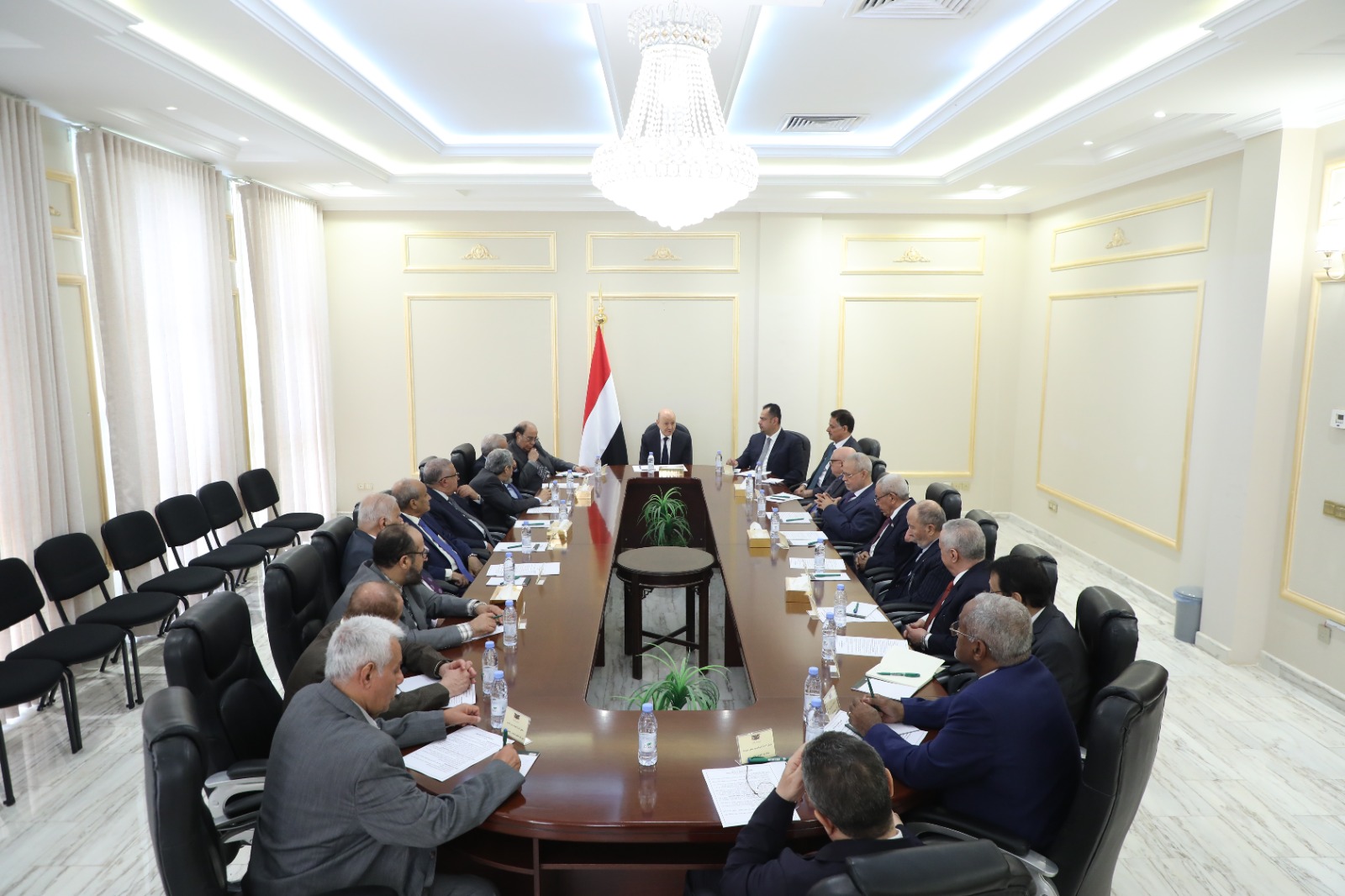
PLC President Affirms Yemen’s Full Solidarity with Saudi Arabia, Vows to End Houthi Terrorism
Sat ، 10 Oct 2026 05:49

PLC President: “Dawn of Yemen” Operation to Continue Until All Its Objectives Are Achieved
Wed ، 07 Oct 2026 05:49