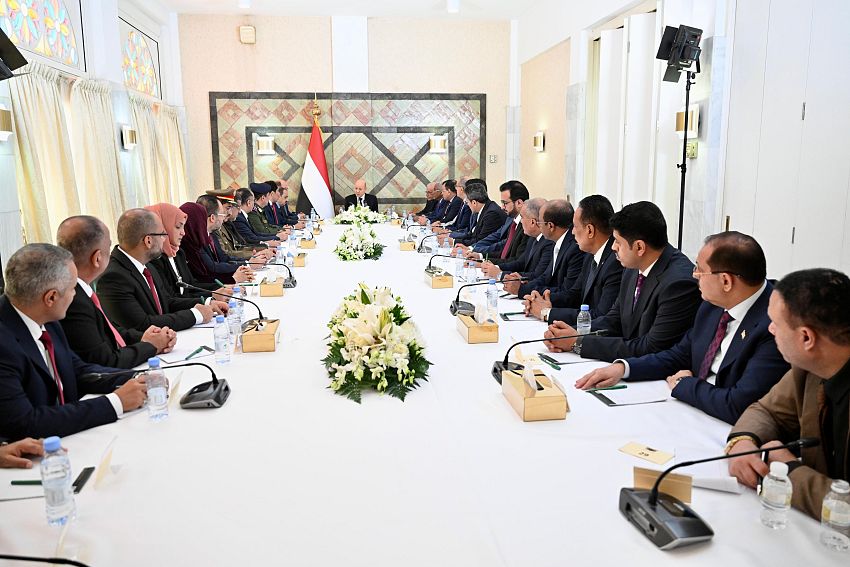
President Al-Alimi Chairs First Meeting of Newly Cabinet: Model-Building, Defeating the Coup, and Partnership with the Kingdom Top Phase Priorities
Riyadh
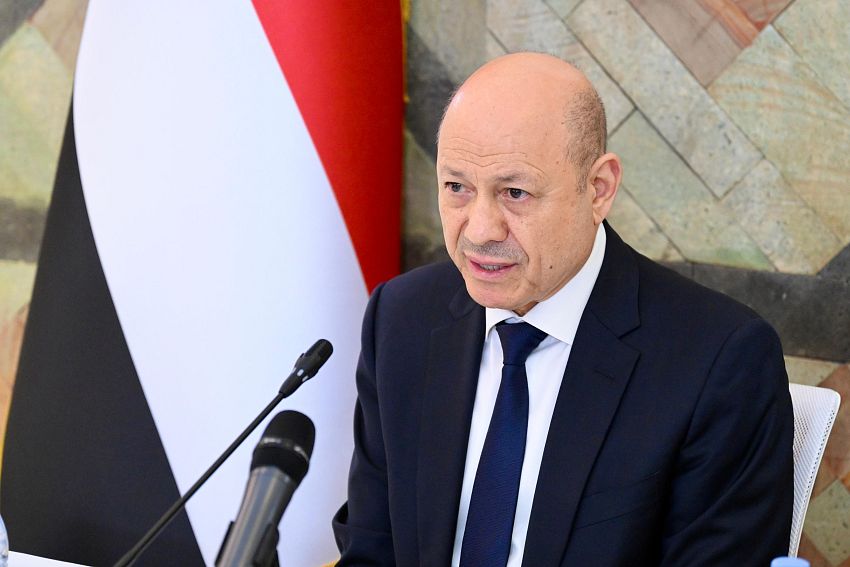
His Excellency President Dr. Rashad Mohammed Al-Alimi, President of the Presidential Leadership Council (PLC), affirmed that the new government has no option but to work toward building a successful model and achieving the desired transformation. He stressed the importance of restoring citizens’ confidence in state institutions and defeating the racist project of the Iran-backed Houthi terrorist militias.
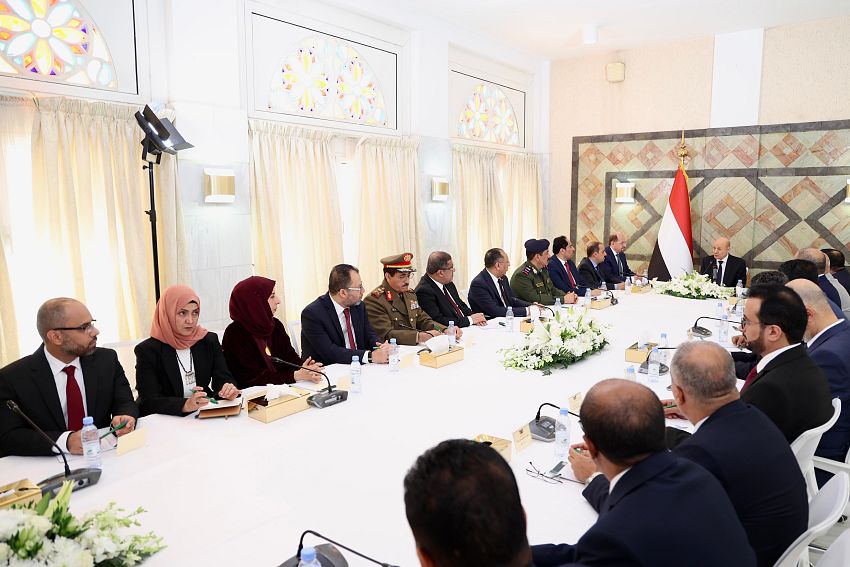
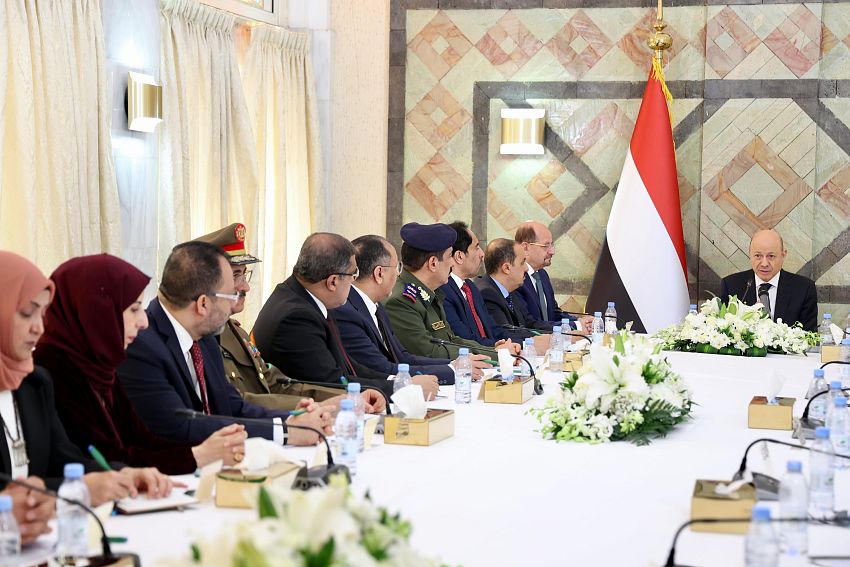
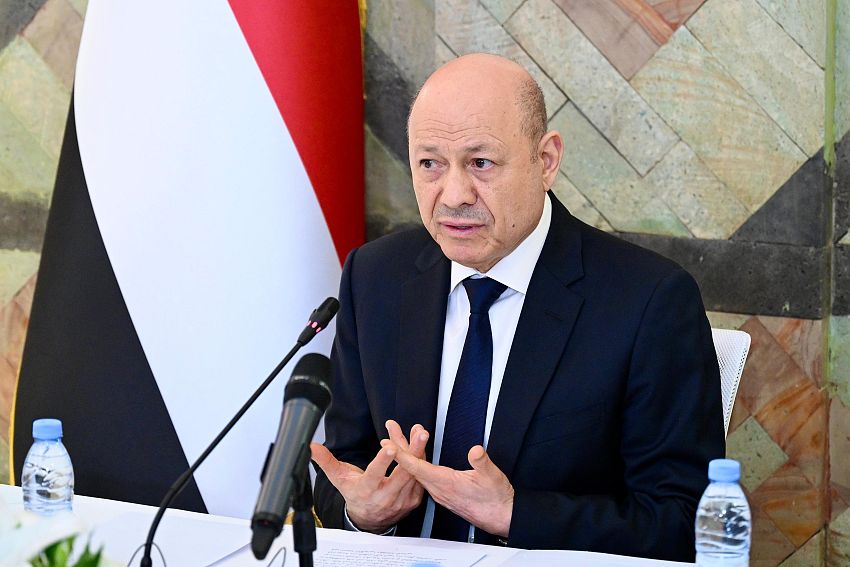
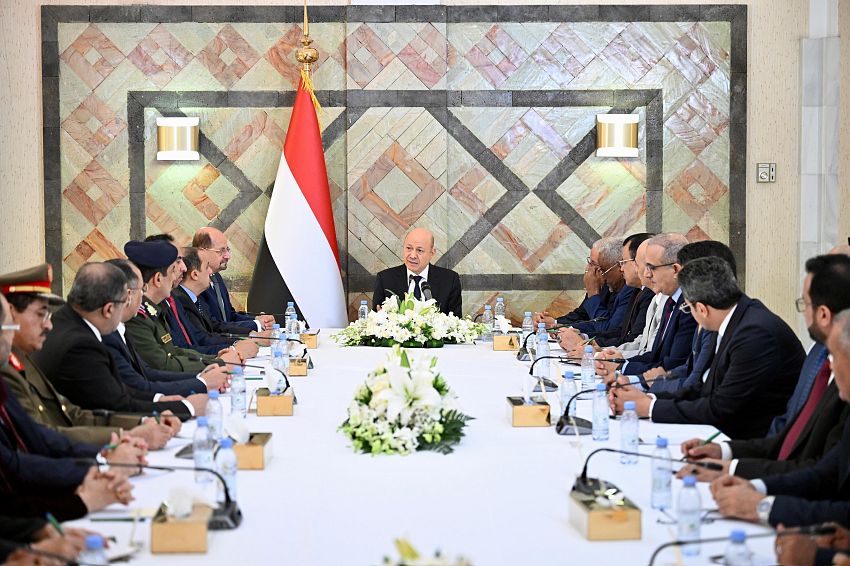
Chairing today, Monday, the first meeting of the new government following the swearing-in ceremony, the PLC President stressed the need to build on the improvement achieved in basic services in recent weeks with the generous support of the Kingdom of Saudi Arabia, and to protect those gains by all means. He emphasized that model-building and restoring the confidence of citizens, as well as brothers and friends, is an integral part of the national battle, not a separate track.
At the outset of the meeting, President Al-Alimi, on his own behalf and that of his fellow PLC members, congratulated the Prime Minister and cabinet members on earning confidence, commending their acceptance of the heavy national responsibility during this exceptional phase.
He also expressed appreciation to former Prime Minister Salem bin Breik for presenting a model of institutional discipline and quiet, diligent work during one of the most difficult periods. He praised the efforts of outgoing ministers in serving the state over the past phase.
The President clarified that the new cabinet is not merely a change of names, but carries a clear message aimed at strengthening broader national partnership and gradually transferring decision-making to a new generation of Yemenis—“a generation we are betting on to lead the future.”
He underscored the heightened responsibility borne by youth and women in the cabinet—not only to ensure the success of the experience, but to build a model, open the way for successive generations, and establish a broader, sustainable partnership.
“We all realize the task is not easy,” he said, “but you have only one choice: work… then work… then work.”
President Al-Alimi stressed that the country’s current circumstances cannot be managed with a traditional mindset, but rather through creative approaches, thinking outside the box, and turning resource scarcity from an obstacle into a driver of change.
He highlighted the strategic partnership with the Kingdom of Saudi Arabia, which views Yemen as part of an ambitious regional vision for stability and revival. He affirmed that relations with the Kingdom are not emotional in nature but represent Yemen’s safe path to the future—embodied in shared interests, destiny, and security. He cautioned against jeopardizing or comparing this partnership with any other relationships.
In this context, the President renewed his profound thanks and appreciation to the Kingdom of Saudi Arabia—its leadership under the Custodian of the Two Holy Mosques King Salman bin Abdulaziz Al Saud, His Royal Highness Crown Prince Mohammed bin Salman bin Abdulaziz, His Royal Highness Prince Khalid bin Salman bin Abdulaziz, Minister of Defense—and to the brotherly Saudi people for their continued support to the Yemeni people and leadership across various fields.
President Al-Alimi stressed the government’s responsibility to build a successful model, including making Aden a true capital of the state. He noted that making a tangible difference requires three pillars: economic and administrative reforms; security and the rule of law; and services.
On the economic front, he emphasized that resource development is a priority no less important than the military front, and a key condition for achieving a real shift in the balance of power on the ground.
He stated that today’s battle is not only against a militia that overthrew the state, but also against accumulated dysfunctions, an expanding poverty cycle, inflation that has exhausted citizens, and the erosion of trust in institutions’ ability to manage resources fairly and efficiently.
“Our overarching goal in this phase,” he said, “is to achieve economic stability and alleviate citizens’ suffering by building on what has been accomplished in recovery plans and reforms agreed with our brothers and partners. This includes supporting the independence of the Central Bank to fully perform its role in managing monetary policy, protecting the national currency, and ensuring a minimum level of economic certainty and sustainable stability reflected in people’s lives.”
He affirmed that curbing inflation and containing the erosion of purchasing power is the daily benchmark by which citizens measure the credibility of the state. He stressed that this will only be achieved through strict fiscal discipline: a realistic budget, precise cash-flow management, full transfer of revenues to the state account, and equitable distribution of spending among governorates.
“It is impossible to speak of a state while its resources are being drained outside the public treasury,” he said. He underscored that regular payment of salaries, rationalization of spending, and combating smuggling and illegal levies are rescue measures that reinforce the legitimacy of the current consensus and restore the concept of public funds as a national trust.
He also stressed full transparency with public opinion regarding market conditions and the balance of payments, comprehensive support for the Central Bank. He warned against any suspicious activities or interventions intended to sow confusion.
President Al-Alimi emphasized directing grants and aid through official channels, making optimal use of support from brotherly countries and available local resources to curb foreign currency outflows and enhance confidence in the new phase.
He affirmed that supporting the private sector and improving livelihoods are central to this path. He stressed the government’s responsibility to create a stable environment that protects investment, ensures the availability of basic goods, and prevents the use of services as a tool of extortion or to threaten gains achieved on the ground.
He identified agriculture, fisheries, manufacturing industries, telecommunications, and transport as lifelines for millions of Yemenis. He stressed the importance of protecting these sectors to open the door to hope, make a real difference in this phase, and pave the way for sustainable recovery, a capable state, and effective economic partnerships with loyal brothers and friends.
On the second pillar, security, President Al-Alimi emphasized the role of security institutions and law enforcement, noting that there can be no state without security, and no security without just institutions.
He rejected narratives promoting claims of a security vacuum as attempts to undermine confidence and target the commendable efforts of the Kingdom of Saudi Arabia to unify ranks and decision-making—security and military—across Yemen and the wider region.
He stressed the Ministry of Interior’s responsibility to enhance its presence and security deployment in a targeted manner focused on vulnerable areas and sources of violence. He called for a clear shift from reaction to proactive action through professional coordination with military police and state security agencies to control illegal weapons, dismantle crime hubs, and protect citizens without discrimination.
“The security we seek is not a show of force,” he said, “but the rule of law, institutional discipline, and a daily message of reassurance that people feel in their lives—affirming the presence and authority of the state.”
President Al-Alimi directed the government to invest in the promising partnership with the Kingdom to make a difference in the interim capital Aden and other liberated governorates. He stressed the immediate return of the government to the country and the regular convening of meetings as a solutions-producing hub.
He also stressed the depoliticization of services under all circumstances, except where directly linked to preventing Houthi militias from benefiting, in accordance with binding international sanctions decisions.
The President affirmed that international organizations, humanitarian workers, and public freedoms are protected under the Constitution and international law, and that the promotion of sectarianism, regionalism, or racism constitutes a crime punishable by law.
He stressed that the state’s official discourse should be articulated domestically through an official spokesperson and disciplined government platforms, and externally through the Presidency, the Prime Minister’s Office, and the Ministry of Foreign Affairs.
He instructed the government to honor the sacrifices of the armed forces and security services and expedite the establishment of a Wounded Care Authority, describing this as a collective responsibility of the PLC and the government. “Through their sacrifices, the state has remained cohesive and present in all forums,” he said, “and thanks to them, successive governments were formed to complete the liberation battle.”
President Al-Alimi emphasized that the government is not a political alignment arena, but a state instrument whose primary mission is to serve citizens and defend their supreme interests.
He stressed that government performance is measured not by slogans and statements, but by the ability to provide a minimum standard of living and services.
He warned that any division within the government immediately impacts people’s lives, not political rivals, underscoring the duty to deter any threats to gains achieved in this regard.
“Citizens do not care who wins politically,” he said, “but who pays salaries, provides electricity and water, controls prices, and preserves a minimum level of stability.” He considered that any practices that disrupt these functions constitute conduct hostile to the interests of the people, regardless of the justifications offered.
He affirmed his confidence that the Prime Minister’s Office has sufficient guidance to make this government a turning point in people’s lives and to end their suffering once and for all.
He added “citizens expect the government to end Houthi extortion related to air and maritime navigation, restore control over airspace, enhance port efficiency, and protect society and state institutions from espionage and infiltration.”
In the education and health sectors, President Al-Alimi stressed that citizens must be the primary focus of services, through leveraging existing partnerships with brothers and the international community to secure medicines and enforce strict oversight of service delivery. He also emphasized the need to liberate minds, immunize youth against sectarianism, combat widespread cheating in public education, link academic outputs to the labor market, and empower youth with tools of production.
He emphasized the role of the Ministries of Planning and International Cooperation and Social Affairs in restoring the confidence of the international community and facilitating the work of organizations. He also stressed the need to shift from a gatekeeping role to leadership in mobilizing support, protecting the most vulnerable, and enhancing social satisfaction.
He expressed hope that the Ministries of Legal Affairs, Human Rights, and Endowments and Guidance will keep pace with changes, promote coexistence and tolerance, protect state assets and interests, recover public funds, improve the quality of decisions, deter human rights violations, and move toward closing illegal detention facilities.
He also expressed his aspiration that the ministry concerned with women’s affairs become a genuine national reference for empowering women and enhancing their participation in decision-making and the labor market. He called on all institutions to support youth, veterans, intellectuals, and thinkers, and to present a bright image of Yemen’s rich heritage.
For his part, Dr. Shai’a Mohsen Al-Zandani, Prime Minister and Minister of Foreign Affairs and Expatriates, said that the President’s address constitutes guiding parameters for the government’s future direction and work. He expressed gratitude to President Al-Alimi and PLC members for the confidence placed in the government.
Dr. Al-Zandani noted that the government was formed amid complex and exceptional circumstances, yet holds aspirations to achieve breakthroughs in thorny and complex files—foremost among them building effective state institutions, enforcing the rule of law, and correcting imbalances at all levels. He stressed strengthening oversight bodies, institutional and organized work, solidarity within the government, and collective responsibility.
He affirmed that the government will not tolerate violations of regulations, systems, and laws, and will address imbalances across political, economic, service, military, and security domains. He stressed responsible engagement with national and international developments and seizing the historic opportunity to prevail for Yemen and its people, restore the state, and end the Houthi coup.
The Prime Minister highly commended the generous support and steadfast fraternal stances of the Kingdom of Saudi Arabia in backing the legitimate government—an essential pillar of success in the most difficult circumstances—and its sincere commitment to seeing Yemen achieve peace, development, and stability.
He also welcomed the President’s call for a Southern Dialogue Conference and the Kingdom’s generous sponsorship of the conference as a responsible and necessary political path to address the Southern Cause through dialogue and consensus. He noted that it is a just national political issue that cannot be denied or bypassed, and can only be resolved through serious, responsible dialogue away from exclusion, vilification, or zero-sum approaches.
The meeting was attended by Dr. Yahya Al-Shuaibi, Director of the Office of the Presidency.

PLC President: Decision to End Houthi Terrorism Is in Force and Irreversible
President Dr. Rashad Al-Alimi, President of the Presidential Leadership Council (PLC), affirmed that “Dawn of Yemen” Operation is proceeding toward its ultimate goal

PLC Warns Against Espionage and Cooperation with Houthis, Orders Pursuit of Those Involved
Tue ، 13 Oct 2026 05:49

PLC President Affirms Yemen’s Full Solidarity with Saudi Arabia, Vows to End Houthi Terrorism
Sat ، 10 Oct 2026 05:49

PLC President: “Dawn of Yemen” Operation to Continue Until All Its Objectives Are Achieved
Wed ، 07 Oct 2026 05:49