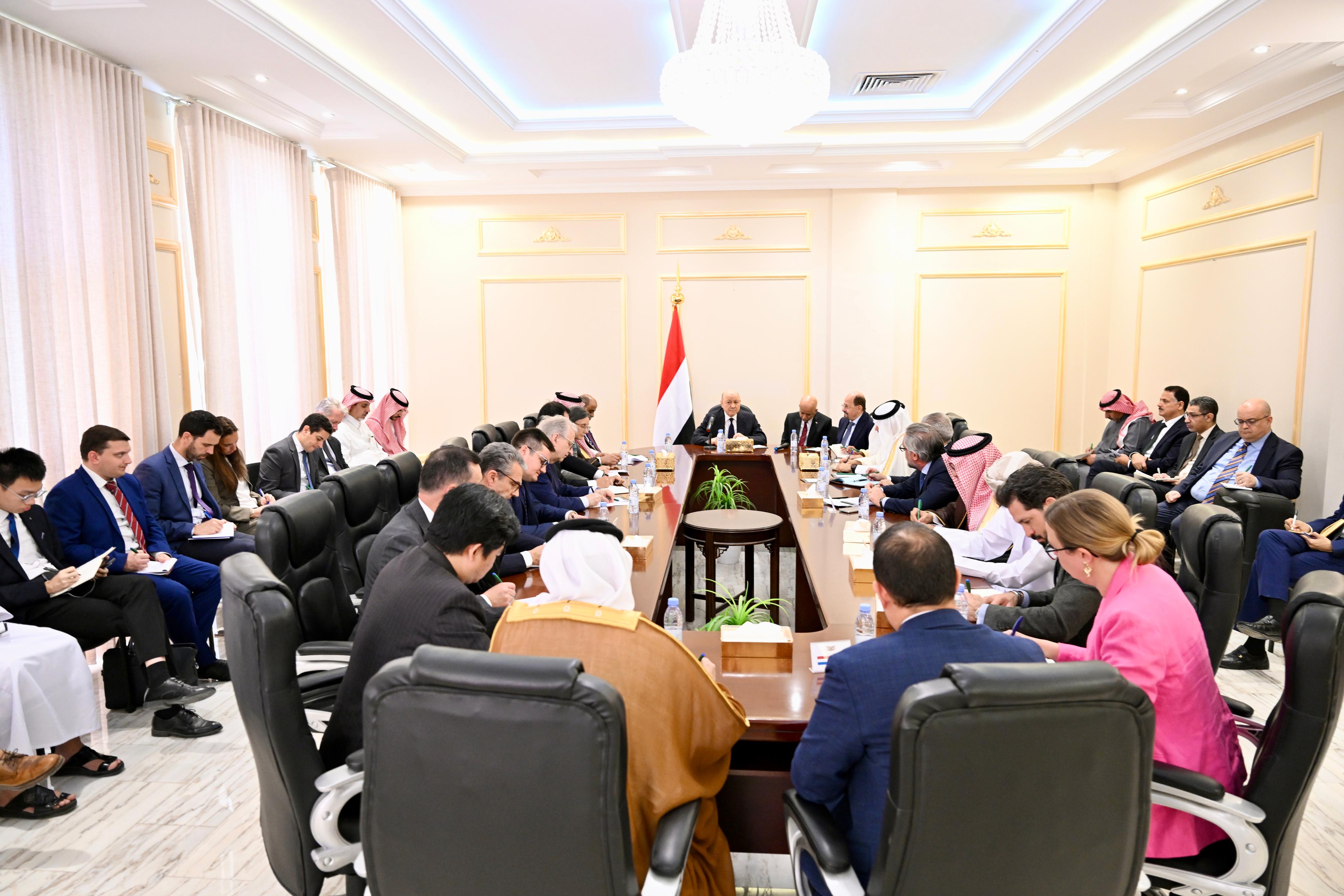
President Al-Alimi Urges Ambassadors of Political Process to Assume Their Responsibilities Regarding Developments in Eastern Governorates
Riyadh
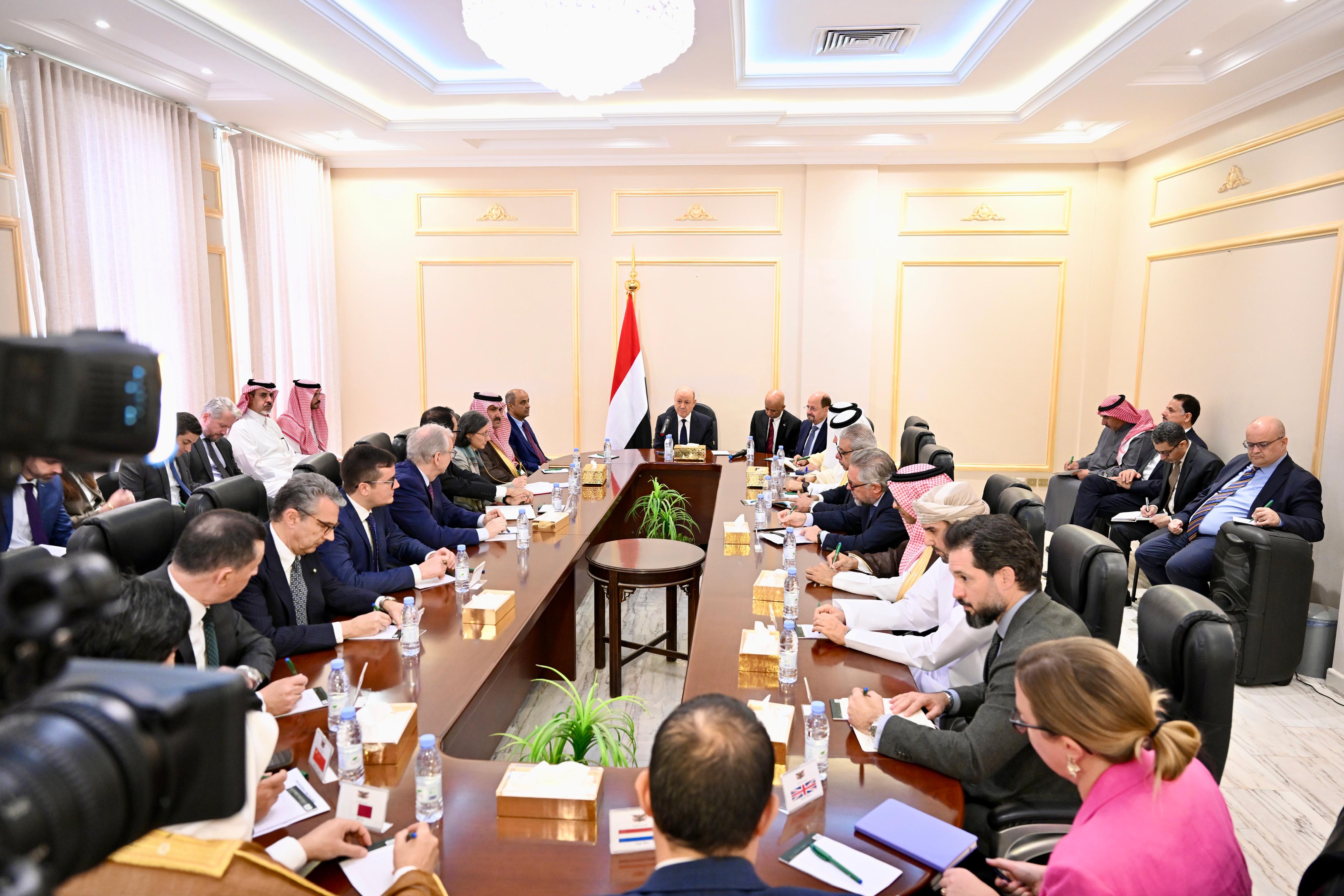
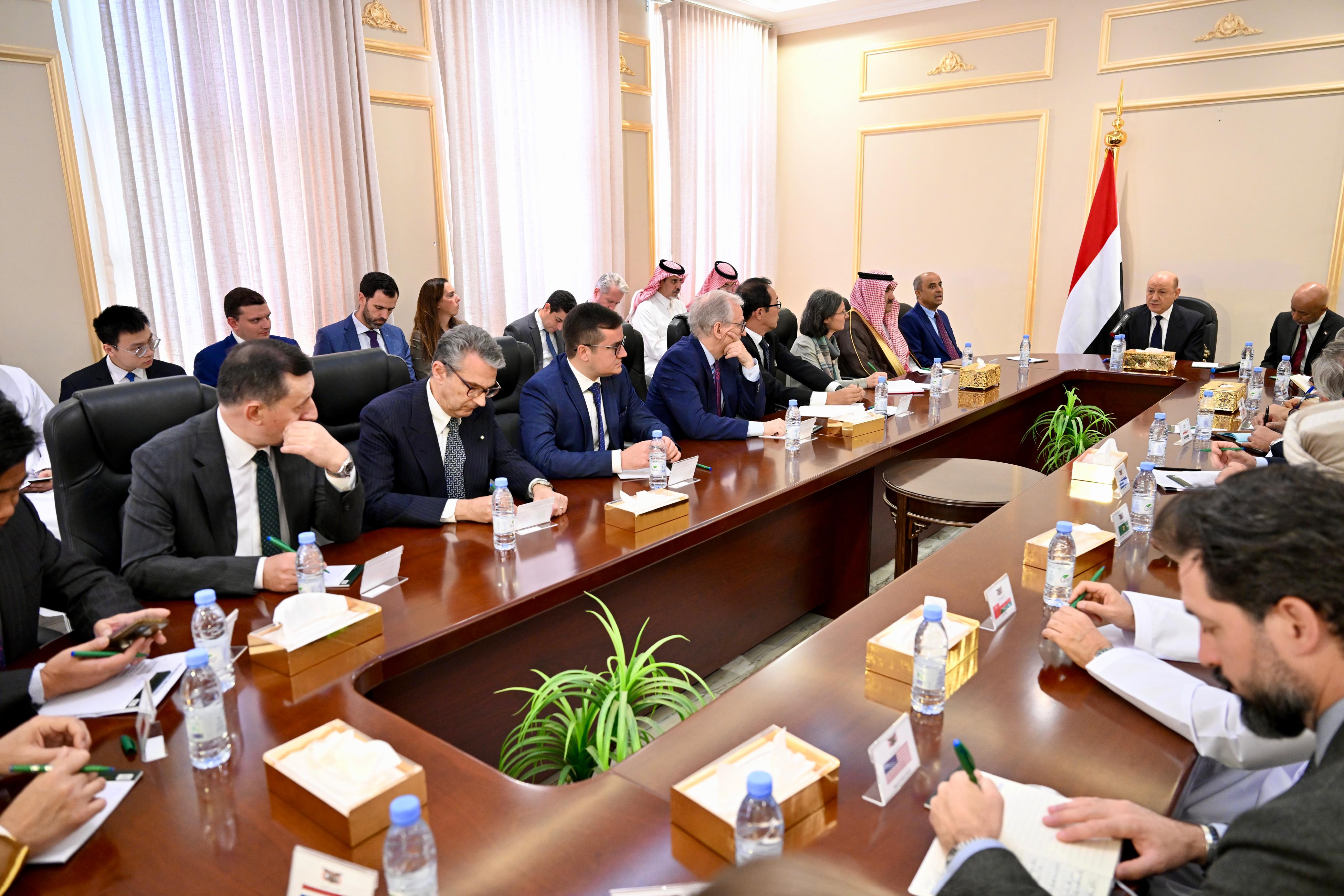
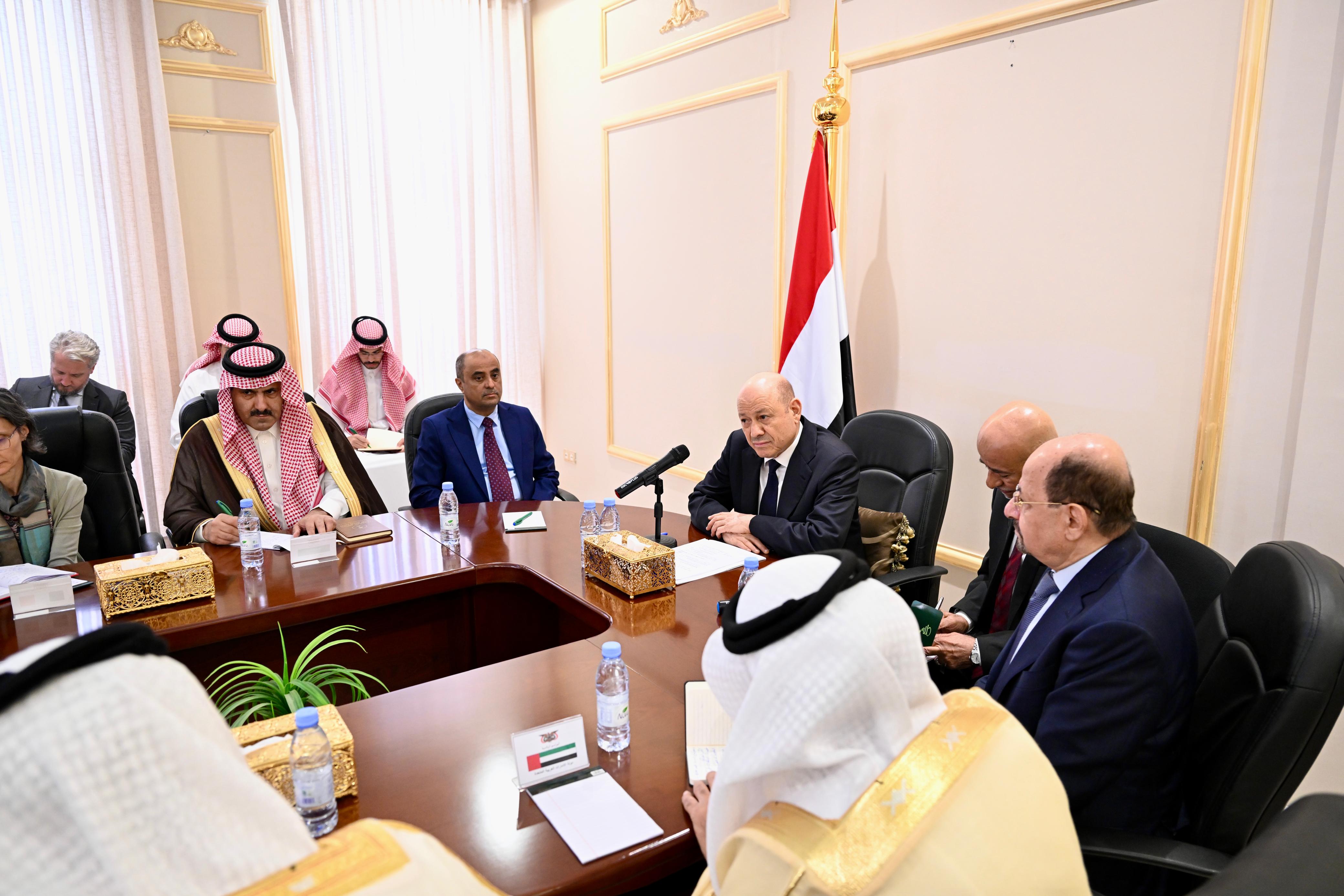
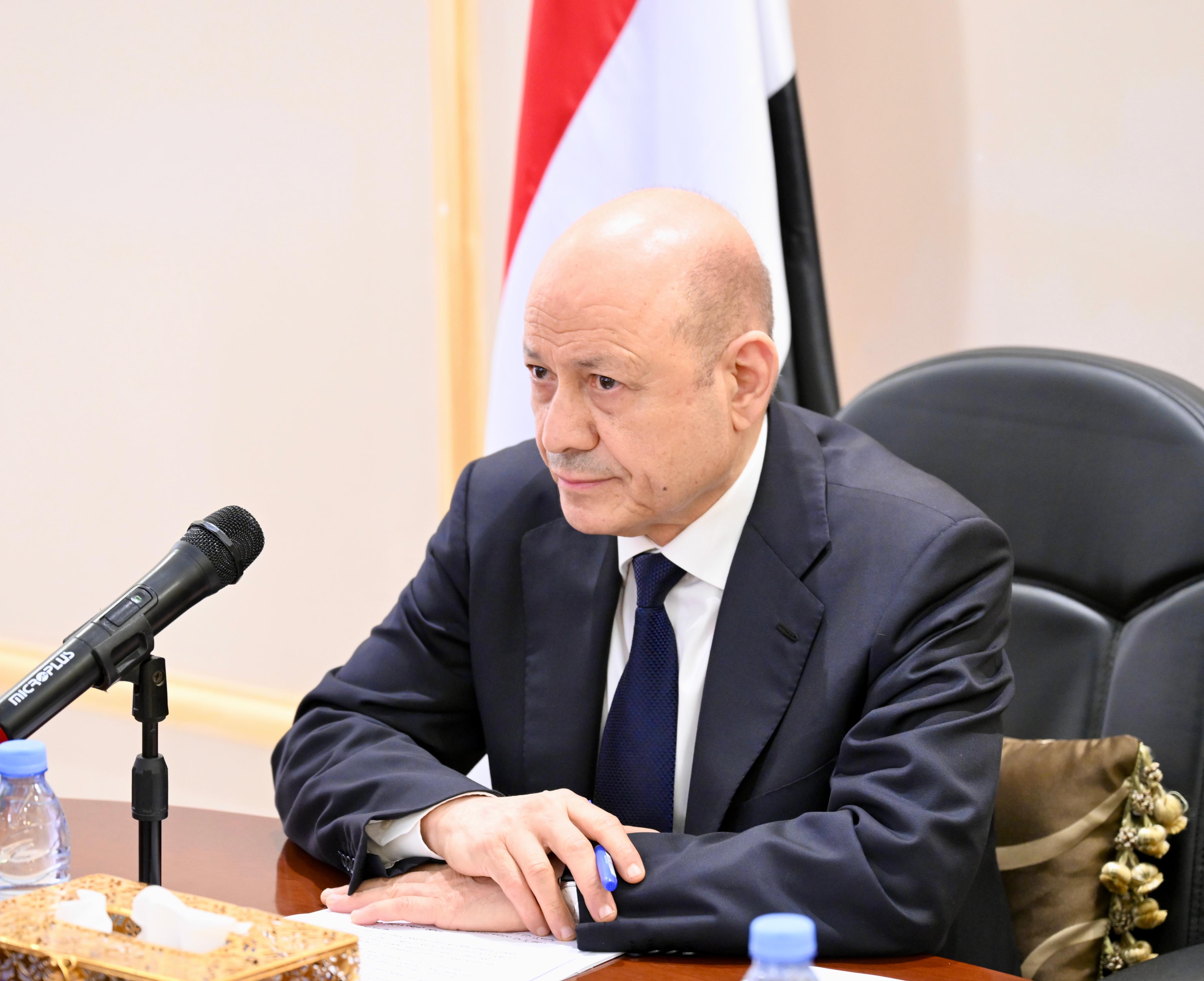
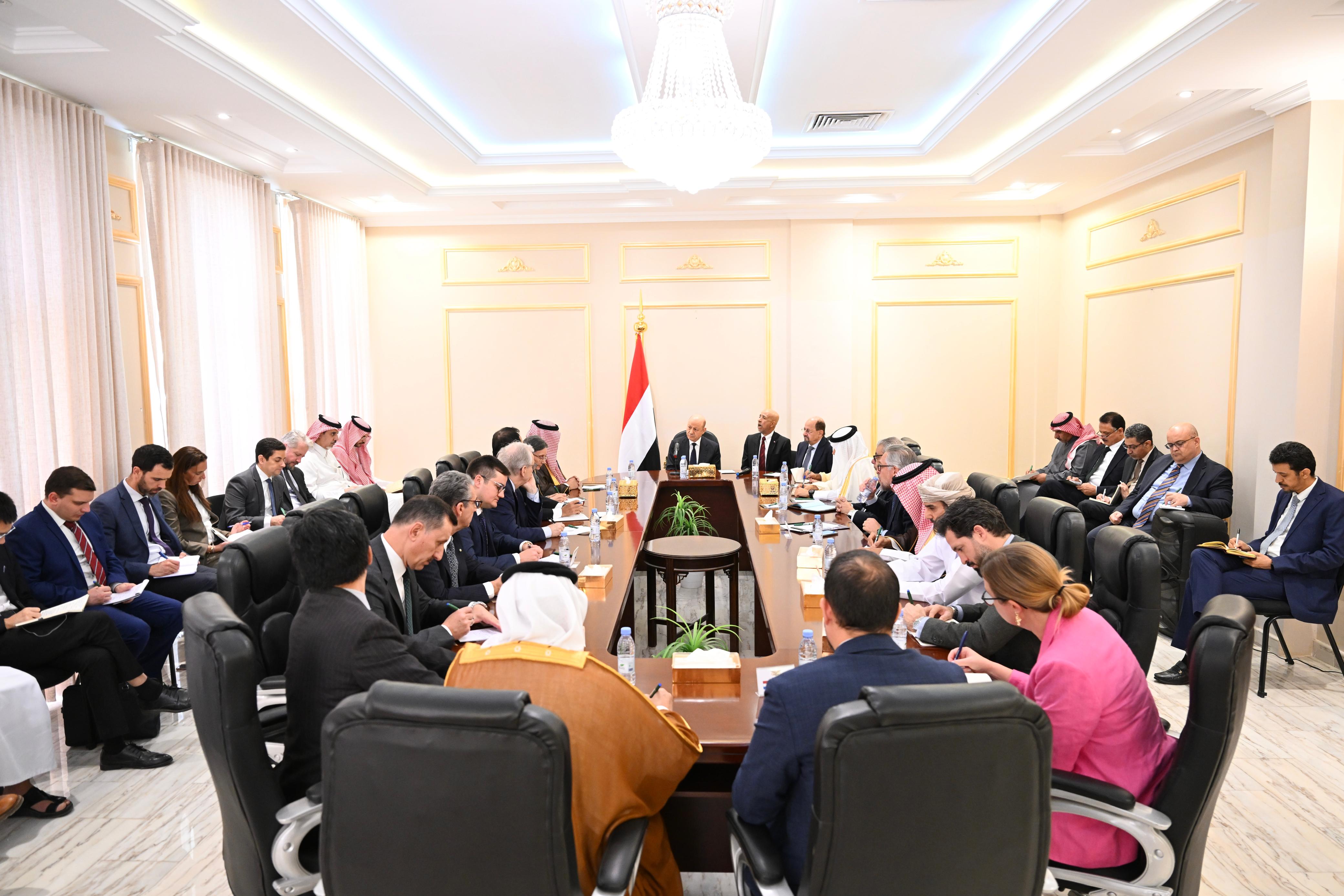
His Excellency President Dr. Rashad Mohammed Al-Alimi, President of the Presidential Leadership Council met today, Monday, with the ambassadors of the states sponsoring the political process in Yemen, in the presence of Prime Minister Salem Saleh bin Buraik.
At the outset of the meeting, the President welcomed the ambassadors and expressed his high appreciation for their countries’ steadfast support for the Yemeni people throughout various stages. He affirmed that the partnership with the international community is not merely a partnership of assistance, but a shared responsibility to safeguard the concept of the state, support its legitimate institutions, and prevent the entrenchment of parallel authorities.
President Al-Alimi briefed the ambassadors on the latest developments in the eastern governorates, noting that the unilateral measures taken by the Southern Transitional Council constitute a clear violation of the references governing the transitional phase. He emphasized that these actions represent a direct threat to the unity of security and military decision-making, undermine the legitimate government’s authority, and pose a serious danger to stability and to the future of the political process as a whole.
His Excellency praised the responsible role played by the Kingdom of Saudi Arabia in sponsoring de-escalation efforts in Hadhramaut, including the agreement that ensured the operation of oil facilities and prevented the governorate from sliding into open conflict. He expressed regret that these efforts continue to face threats due to unilateral military movements that have perpetuated a climate of tension and mistrust on a wider scale.
The President warned of the grave economic and humanitarian consequences of any instability, particularly in Hadhramaut and Al-Mahra. He explained that such disruptions could hinder the payment of public salaries, lead to fuel shortages for power stations, worsen the humanitarian crisis, undo achieved economic reforms, and weaken donor confidence in the legitimate government.
President Al-Alimi stressed that one of the most effective pathways to de-escalation lies in a unified, clear, and explicit international position rejecting unilateral measures. He emphasized the need to reaffirm full adherence to the references of the transitional phase and to support the legitimate government as the sole executive authority responsible for safeguarding the nation’s supreme interests.
He reiterated that the Presidential Leadership Council’s position—based on past experience—remains firm in not providing political cover for any unilateral actions outside the institutional framework of the state, wherever genuine national, regional, and international will exists.
In this context, the President underscored the importance of unified positions among coalition states in support of the legitimate government, in a manner that preserves the unity of state institutions and prevents destabilization in the liberated governorates.
His Excellency emphasized that the country and its citizens’ living conditions cannot withstand the opening of new fronts of attrition. He stressed that the true battle remains focused on restoring state institutions and ending the coup of the Iran-backed terrorist Houthi militias.
President Al-Alimi reaffirmed the Leadership Council’s and the government’s commitment to fulfilling the state’s essential obligations toward its citizens and its regional and international partners, foremost among them the Kingdom of Saudi Arabia, whose continuous and swift responses to the needs of the Yemeni people he highly commended.
His Excellency called on the international community to adopt a unified position rejecting any challenge to the government’s exclusive authorities and to exert public pressure for the withdrawal of forces that have entered Hadhramaut and Al-Mahra from outside their territories. He also urged support for the state and local authorities in carrying out their constitutional duties to protect sovereign facilities, reinforce de-escalation efforts, and prevent renewed escalation.
President Al-Alimi affirmed that the Yemeni people and their government are capable of deterring any threat and protecting the state’s legal status, warning that the collapse of the state logic in Yemen will leave no stability to build upon—neither in the south nor in the north. He renewed his call for collective responsibility to prevent the country from sliding further into fragmentation and chaos.
For their part, the ambassadors of the states sponsoring the political process in Yemen reaffirmed their full commitment to supporting the Presidential Leadership Council, the government, Yemen’s unity, stability, and territorial integrity.
They also stressed the importance of the unity of the Presidential Leadership Council and the government’s fulfillment of its obligations to regional and international partners, as a prerequisite for continued support at all levels.
The meeting was attended by Dr. Shayia Al-Zandani, the Minister of Foreign Affairs and Expatriates.


PLC President: Decision to End Houthi Terrorism Is in Force and Irreversible
President Dr. Rashad Al-Alimi, President of the Presidential Leadership Council (PLC), affirmed that “Dawn of Yemen” Operation is proceeding toward its ultimate goal

PLC Warns Against Espionage and Cooperation with Houthis, Orders Pursuit of Those Involved
Tue ، 13 Oct 2026 06:36

PLC President Affirms Yemen’s Full Solidarity with Saudi Arabia, Vows to End Houthi Terrorism
Sat ، 10 Oct 2026 06:36

PLC President: “Dawn of Yemen” Operation to Continue Until All Its Objectives Are Achieved
Wed ، 07 Oct 2026 06:36