PLC President: Yemen’s Defense of Bab Al-Mandab Protects Global Maritime Routes and Life-Saving Supplies
Riyadh
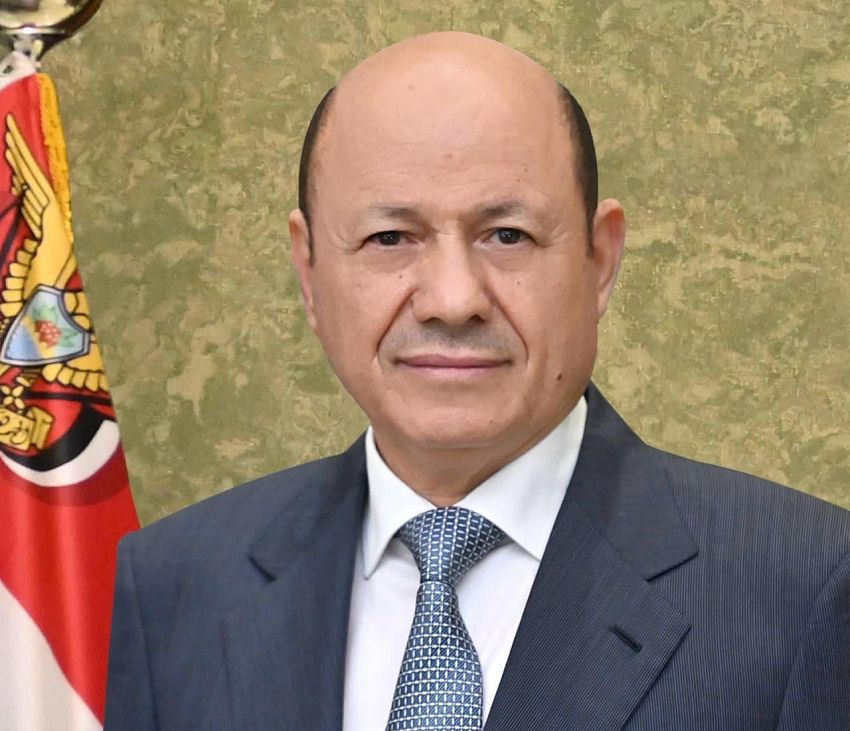
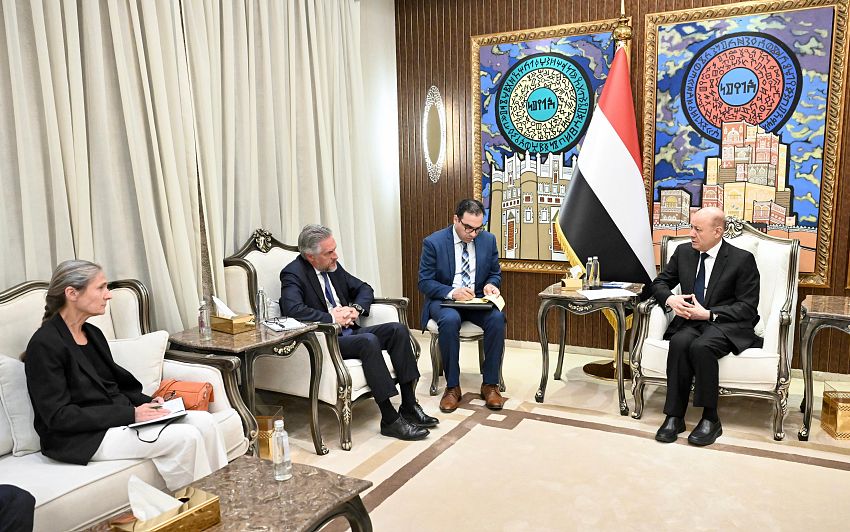
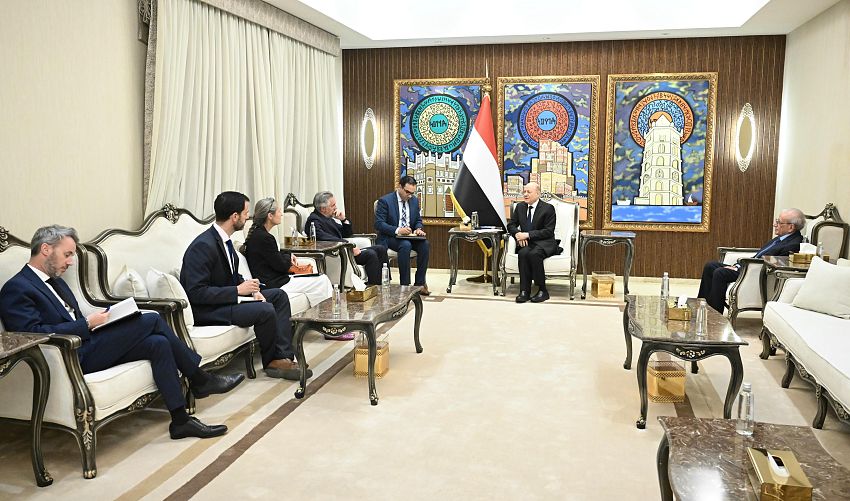
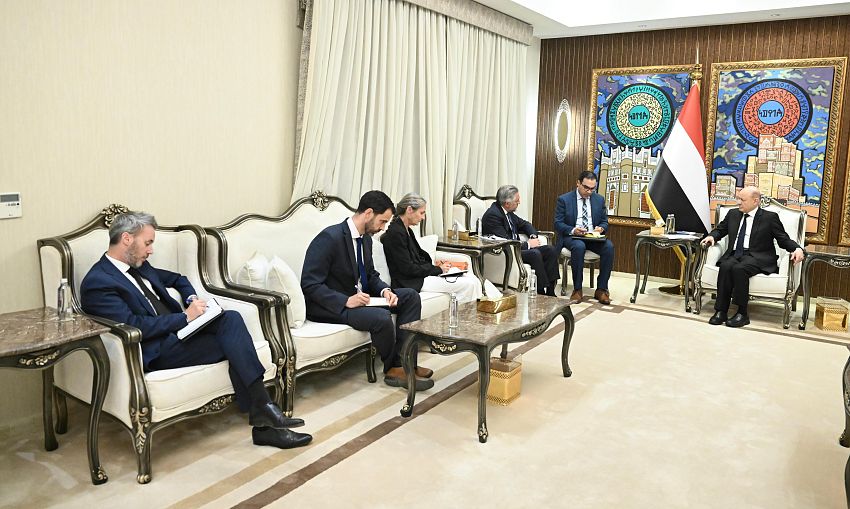
President Dr. Rashad Al-Alimi, President of the Presidential Leadership Council (PLC), received today, Thursday, Head of the European Union Delegation Patrick Simonnet and Ambassador of the Kingdom of the Netherlands Janet Sebben. During the meeting, they discussed areas of bilateral cooperation, as well as the latest local and regional developments of common interest.
President Al-Alimi highly valued the European Union’s stances in support of the PLC and the government, Yemen’s security and stability, efforts to achieve peace, and initiatives to alleviate the humanitarian suffering.
The President welcomed the EU’s recent stances and its condemnation of the Houthi escalation and attacks targeting civilians and civilian facilities. He said the current developments make the partnership between Yemen and the European Union more important than ever, not only for Yemen, but also for the security of the Red Sea, maritime navigation, and international trade.
President Al-Alimi briefed the EU delegation head and the Dutch ambassador on the latest developments amid the escalation of hostile operations by the Houthi terrorist militias, particularly toward Bab Al-Mandab and the western coastal fronts in Taiz Governorate.
In this context, the President affirmed that the state would not retreat from fulfilling the aspirations of the Yemeni people. It would continue to assume its responsibility to protect its citizens, restore its institutions, extend its authority throughout the national territory, and safeguard its coastline, ports, and territorial waters.
President Al-Alimi stressed that Yemen, as it defends Bab Al-Mandab, its coastline, and territorial waters and makes sacrifices to protect them, is defending not only its own security and sovereignty, but also contributing to international security and protecting global interests. He said Yemen is helping to secure one of the world’s most important maritime routes for trade, energy supplies, and life-saving food commodities.
He stressed that this shared responsibility requires a more effective international partnership to support the Yemeni state and strengthen its ability to protect this strategic maritime route.
The President pointed to the clear link between this escalation and Iran’s broader strategy of shifting the cost of international pressure on Iran onto others. This is done by targeting neighboring countries, threatening energy facilities, and disrupting the Red Sea and supply chains, thereby turning Iran’s crisis with the international community into a crisis for the region and the global economy.
He stressed that Bab Al-Mandab must not be allowed to become another Strait of Hormuz, nor should Yemen be turned into a platform for geopolitical blackmail on behalf of the Iranian regime.
President Al-Alimi affirmed that the government did not initiate this round of the war. Rather, the militias chose to resume the escalation by operating unauthorized flights and attacking civilians, displacement camps, the Port of Mocha, and civilian facilities in an attempt to impose new military realities on the ground.
“Therefore, we do not want international discourse to return to the same traditional equation of calling on both sides to exercise restraint, as if responsibility were equally shared,” he said. “The party that initiated the escalation must be identified, and those who launch attacks must hold responsibility for the escalation and its consequences at all levels,” he added.
President Al-Alimi called for urgent European action, in coordination with the United Nations and donors, to provide shelter, food, healthcare, and other essential services to displaced persons, and to support local authorities. He warned against leaving thousands of Yemenis facing a new wave of displacement while the international community confines itself to statements of concern.
He also renewed his call to move from managing the threat to addressing its source. This requires the effective implementation of relevant UN Security Council resolutions and tighter measures to prevent the smuggling of weapons, technology, and dual-use components to the militias.
President Al-Alimi urged EU member states to maintain their economic, humanitarian, and development support for the government and to encourage donors to support the reform and recovery program. He said this would strengthen state institutions’ capacity to provide services and meet their obligations.
He said a capable state is the real guarantee for peace. He stressed that peace based on state weakness, while militias retain their weapons and decision-making power over war, would amount to nothing more than a truce until the next round of fighting.
The meeting was attended by Dr. Yahya Al-Shuaibi, Director of the Presidency Office.
PLC President: Yemen’s Defense of Bab Al-Mandab Protects Global Maritime Routes and Life-Saving Supplies
President Dr. Rashad Al-Alimi, President of the Presidential Leadership Council (PLC), received today, Thursday, Head of the European Union Delegation
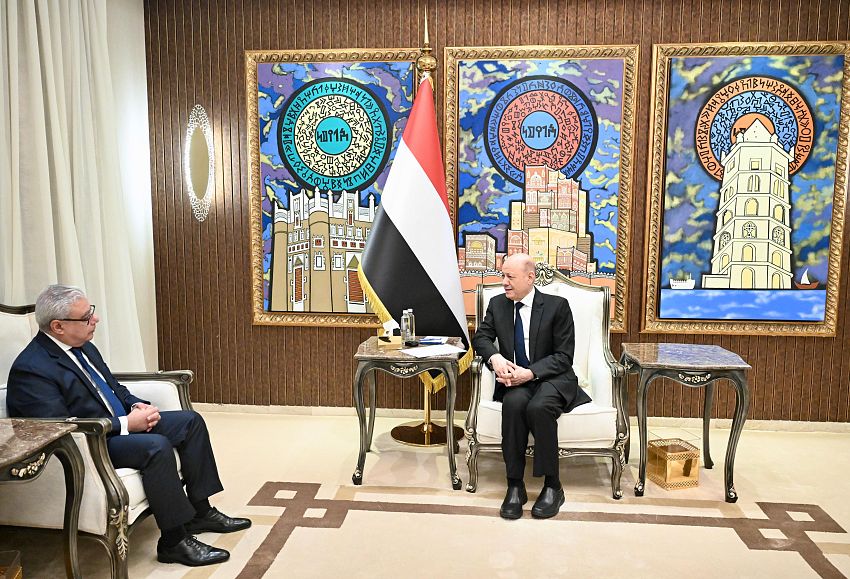
President Al-Alimi Praises Egypt’s Stance in Support of Yemeni People and Political Leadership
Thu ، 10 Sep 2026 11:06
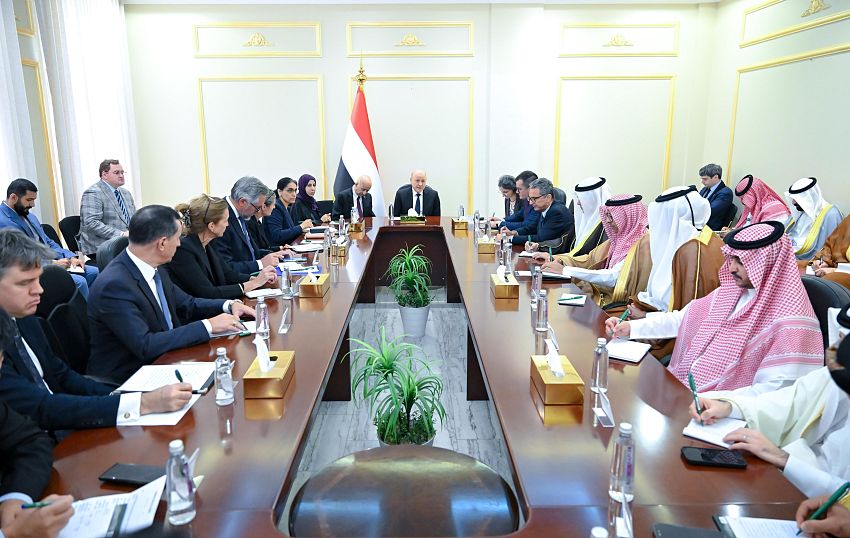
PLC President: Houthi Militias has Chosen War and Must Bear Its Consequences
Wed ، 09 Sep 2026 11:06