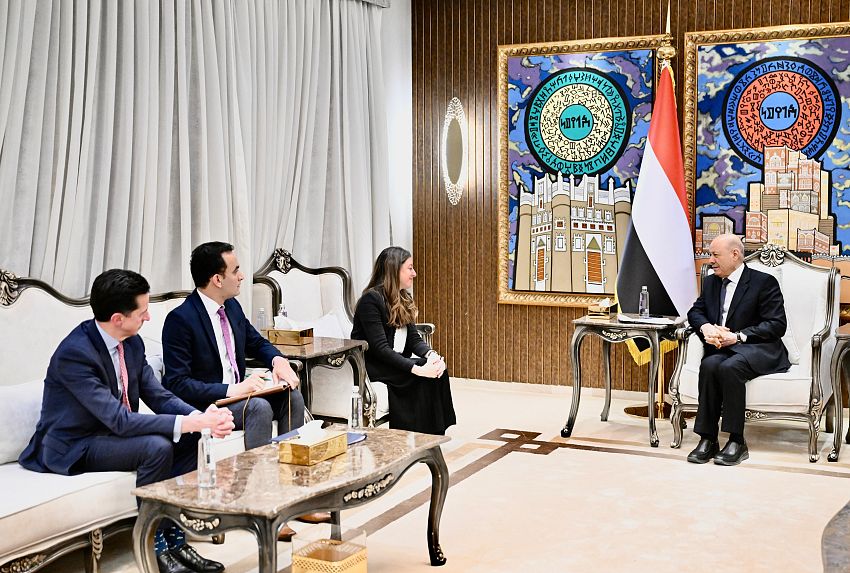
President Al-Alimi: Treating Houthis as a Fait Accompli Authority Means Legitimizing Divine Right, Racism, and Arms Outside State Control
Riyadh
President Dr. Rashad Mohammed Al-Alimi, President of the Presidential Leadership Council, said that any approach to ending the war in Yemen would fail unless the Houthi militias are addressed as part of a cross-border Iranian project rather than a local political actor. He warned that reducing such a crisis to truces and ceasefire arrangements would merely amount to temporary risk management instead of building sustainable peace.
President Al-Alimi said the Houthis were never an excluded group as they claim, noting that they had participated in the National Dialogue Conference but refused to become a political party operating within the framework of the state. Instead, they sought to impose a reality above the constitution based on monopolizing arms and authority outside state institutions and national partnership.
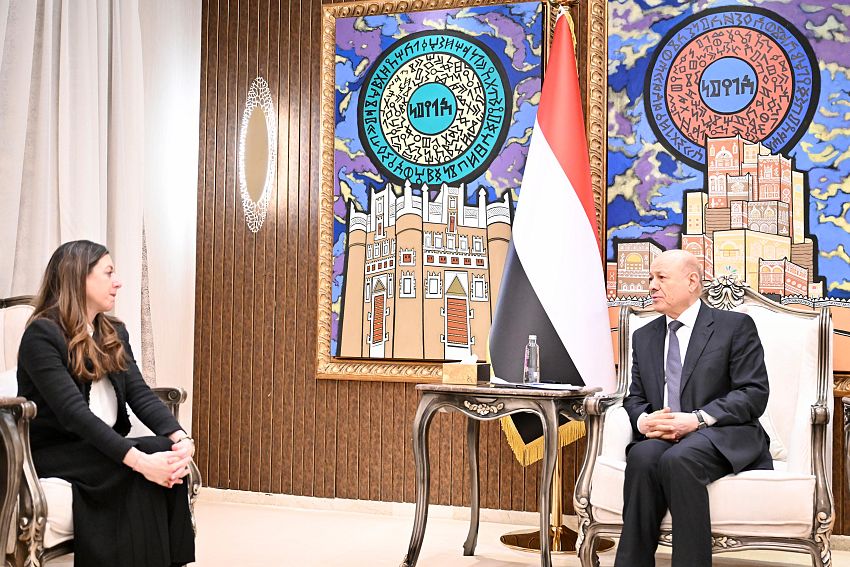
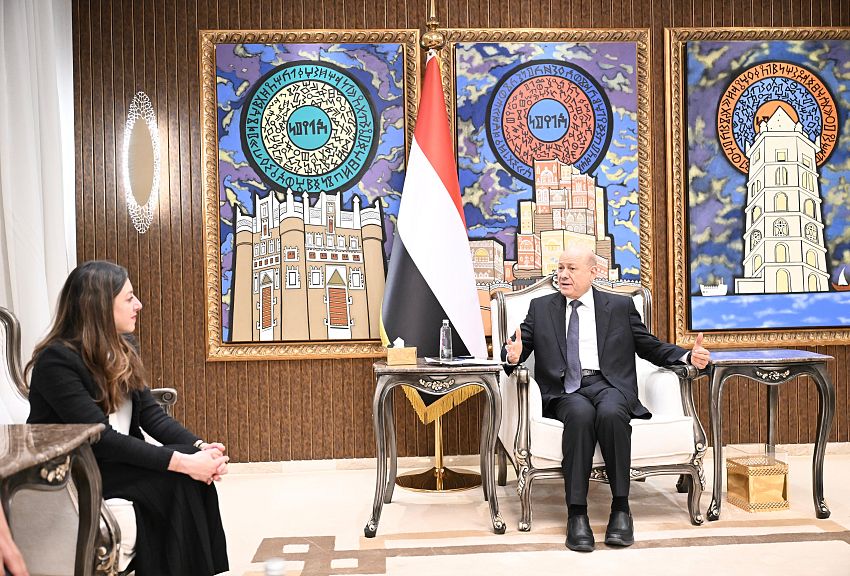
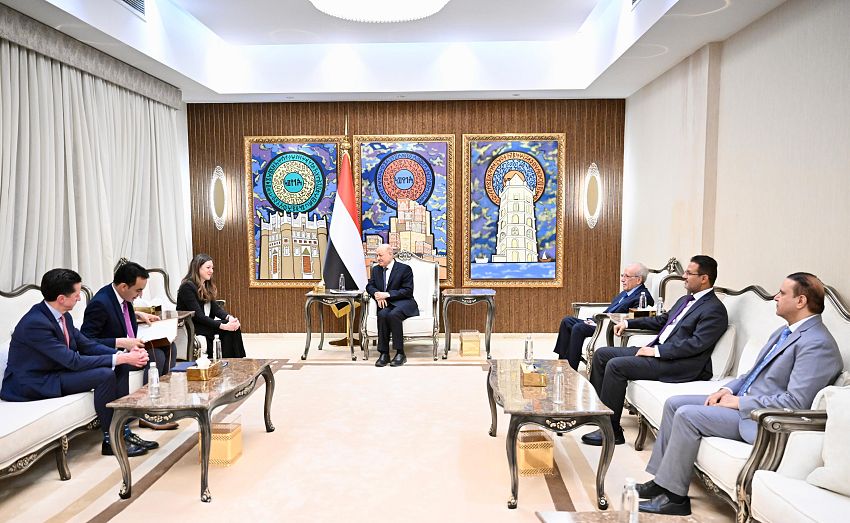
The President made the remarks during a meeting with a delegation from Chatham House headed by Dr. Sanam Vakil, Director of the Middle East and North Africa Program, to discuss the latest national developments and the approaches required to end the suffering caused by the Iran-backed Houthi terrorist militias.
“The real peace in Yemen does not mean fragile truces or a ceasefire, but rather the building of a state that guarantees rights and freedoms for all citizens,” President Al-Alimi said. He added that “treating the Houthi militias as a normal political actor or a fait accompli authority grants legitimacy to the notion of divine right, entrenches racism, and legitimizes arms outside state control.”
Commenting on some Western approaches toward Yemen, the President said a number of researchers confuse cities held by force with pluralistic societies. He stressed that the heavy-handed security grip in Houthi-controlled areas does not indicate the existence of normal and safe political or social life.
He added that the Houthi group “has surpassed many terrorist organizations in its practices” through the use of ballistic missiles, drones, naval mines, and car bombs, as well as targeting international shipping. He said the group has also dismantled public life, attempted to entrench racism, and restricted freedoms.
The President also linked the security of the Red Sea to the future of regional stability, saying that protecting international navigation begins not only at sea but also with ending the sources of threat on land.
President of the Presidential Leadership Council affirmed that the partnership with the Kingdom of Saudi Arabia represents a geographic, security, and strategic necessity shaped by geography, shared borders, and common interests.
President Al-Alimi noted that Saudi support for Yemen has extended beyond military and security assistance to include support for the economy and public services, saving lives, and rebuilding state institutions. He added that the security of Yemen and the Gulf has become more interconnected than ever amid current challenges.
The meeting also touched on Iran’s destabilizing role in the region, as well as reforms being led by the Presidential Leadership Council and the government, including expanding the participation of youth and women in state institutions, restructuring security agencies, and integrating Yemeni professionals from both inside and outside the country.
The meeting was attended by Dr. Yahya Al-Shuaibi, Director of the Office of the Presidency and Ahmed Al-Saleh, Minister of State.

PLC President: Decision to End Houthi Terrorism Is in Force and Irreversible
President Dr. Rashad Al-Alimi, President of the Presidential Leadership Council (PLC), affirmed that “Dawn of Yemen” Operation is proceeding toward its ultimate goal

PLC Warns Against Espionage and Cooperation with Houthis, Orders Pursuit of Those Involved
Tue ، 13 Oct 2026 04:58

PLC President Affirms Yemen’s Full Solidarity with Saudi Arabia, Vows to End Houthi Terrorism
Sat ، 10 Oct 2026 04:58

PLC President: “Dawn of Yemen” Operation to Continue Until All Its Objectives Are Achieved
Wed ، 07 Oct 2026 04:58