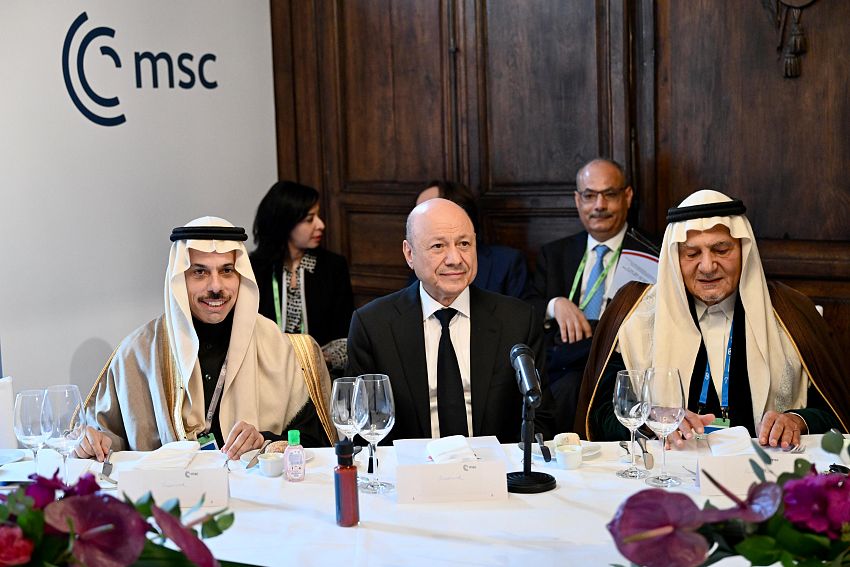
President Al-Alimi: Integration into Gulf System Begins with Internal Reconciliation and Criminalizing Sectarianism and Uncontrolled Weapons
Munich
His Excellency Dr. Rashad Mohammed Al-Alimi, President of the Presidential Leadership Council, renewed the call for strengthening the Yemeni-Gulf partnership through the comprehensive integration of Yemen into the Gulf Cooperation Council (GCC).
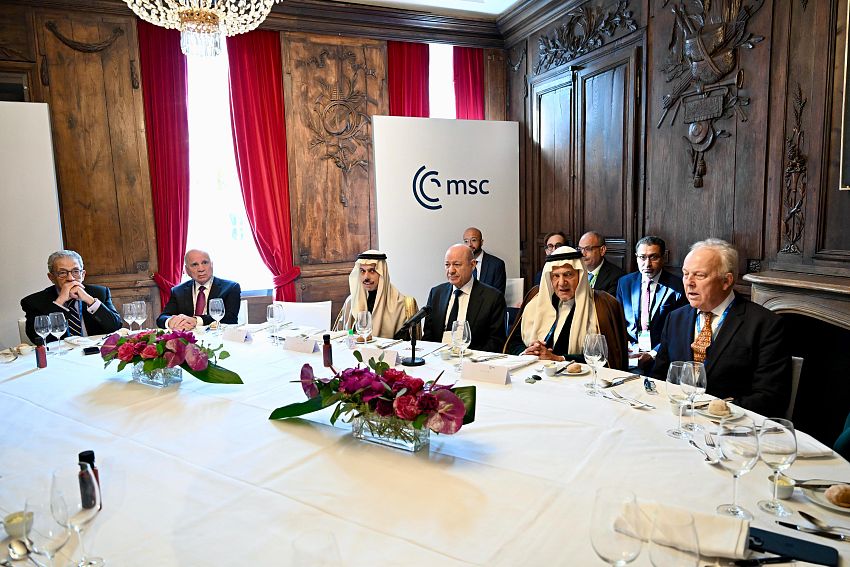
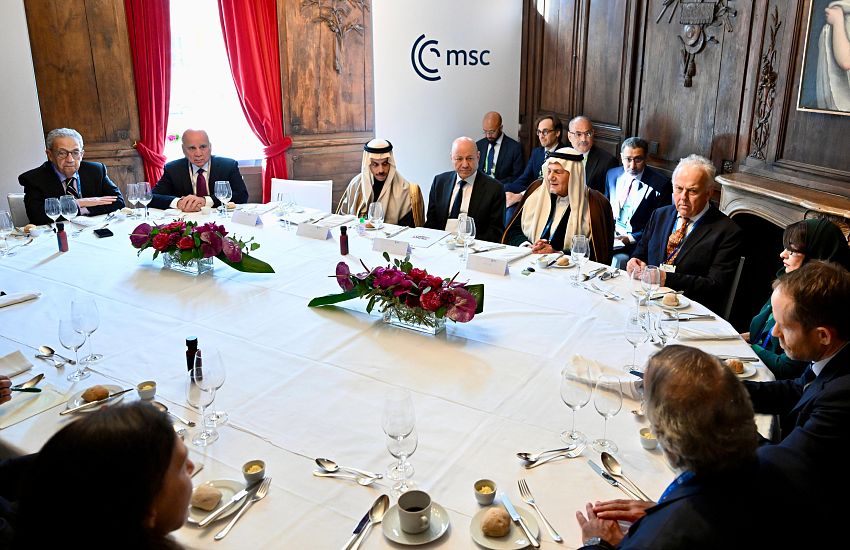
During a dialogue session organized by the Gulf Research Center in cooperation with the International Crisis Group on the growing role of Gulf states in conflict resolution, the President expressed Yemen’s aspiration to elevate its relations with the Gulf countries to a comprehensive strategic partnership, institutional integration, and full geo-economic integration. This would include the launch of a “Gulf Marshall Plan” to initiate the reconstruction of the country, drawing on the unique experience of the Saudi Development and Reconstruction Program for Yemen (SDRPY) and in alignment with the ambitious development visions of GCC states, foremost among them Saudi Vision 2030.
The President stated: “We realize that the current circumstances may not be conducive to Yemen’s full membership in the GCC. However, we look forward to activating broader cooperation at all available levels and expanding gradual engagement with GCC institutions through the Saudi gateway.”
He explained that “the safe path for Yemen’s integration with its Gulf depth must pass through Riyadh, as an inevitable partner in shaping recovery and a strategic center of gravity. He added that this role is essential to reshaping the regional order in a way that limits the geopolitical threats from which Yemen has suffered more than any other country.”
He added, “We are betting on Yemeni-Saudi relations today as the starting point for rebuilding the model, and then generalizing it with the rest of the Gulf states.”
The President called on policymakers and Gulf and Yemeni think tanks to launch constructive dialogues in support of the Saudi vision and approach in Yemen.
President Al-Alimi reviewed the transformations witnessed in Yemeni-Gulf relations since the mid-twentieth century at all levels, culminating in growing awareness of Yemen’s pivotal role in the Gulf and regional security system. He added, particularly with the rise of destabilizing Iranian influence in the region and the emergence of terrorist groups, foremost among them the Houthi militias, as well as Al-Qaeda and ISIS, which operate in alignment with them.
He affirmed that “Operation Decisive Storm in 2015 was clear evidence that Yemeni-Gulf relations go beyond the diplomatic and economic dimensions, and that the Gulf security system will remain threatened so long as the Yemeni state is not stable.”
On another front, the President addressed the Yemeni-Gulf approach toward the regional order at the level of vision. He stressed the alignment of the Yemeni state’s perspective with that of the Kingdom of Saudi Arabia and the overwhelming majority of GCC states, which focus on balance, integration, and stability. At the forefront of this vision is support for national state institutions in the region, combating non-state entities that practice terrorism and fragment countries, and promoting development through ambitious national projects led by pioneering states in the region, alongside friendly support plans for countries suffering from crises and fragility.
In this context, the President commended the Kingdom of Saudi Arabia’s stance and its pivotal role in supporting the building and strengthening of the Yemeni state, represented by its legitimate government, and in reinforcing its national presence.
He also praised the leading role of Gulf states in diplomatic mediation and peace efforts at both regional and international levels, including in Yemen. He noted that the Gulf system, led by Saudi Arabia, has consistently played a key role in extinguishing crises for decades. This began with the Gulf Initiative, which spared the country from civil war and placed it on the path of dialogue and political transition, had it not been for the Houthi coup backed by the Iranian regime.
He added that these efforts continued through the Kuwaiti mediation, and most recently through the GCC’s role in resolving disputes within the alliance supporting the legitimate government, as well as the proposed peace roadmap engineered by Saudi diplomacy.
The President stressed that any forthcoming efforts in this regard will remain incomplete unless they ensure the dismantling of armed militias and the cessation of destabilizing Iranian interference in the region’s security and stability.
He pointed out that while Gulf states may benefit from mediating from a position of neutrality in various regional and international files, Yemen constitutes an exception. Mediation, he said, must be accompanied by a package of pressures coupled with development—an approach understood almost exclusively by Riyadh despite its high costs. He explained that this was reflected in the recent series of measures in the eastern governorates and the guarantees proposed to address the southern issue, which have helped de-escalate tensions, protect civilians, and generate positive momentum in strengthening national state institutions rather than empowering armed militias.
The President concluded by outlining his vision for a secure future for Yemen alongside its neighbors, starting with self-criticism of past experiences and missed opportunities in relations with the Gulf. “We believe that Yemenis must first reconcile among themselves, zero out all internal disputes, and cease mortgaging the interests and resources of successive generations,” he said.
He further emphasized reconciliation with neighboring GCC states and sending sufficient assurances that Yemen is even more committed to safeguarding the security of the Arabian Peninsula and its interests.
President Al-Alimi stressed that this requires abandoning hostile tendencies toward others, as well as sectarian and dynastic ideologies, and addressing the proliferation of uncontrolled weapons by criminalizing them in the constitution and law. He noted that Yemen has never been strong or distinguished by reckless arms, but rather by its ancient history and human capacities—through which it can become a constructive contributor to the region’s security and stability and among the greatest beneficiaries of its economic and developmental boom.

PLC President: Decision to End Houthi Terrorism Is in Force and Irreversible
President Dr. Rashad Al-Alimi, President of the Presidential Leadership Council (PLC), affirmed that “Dawn of Yemen” Operation is proceeding toward its ultimate goal

PLC Warns Against Espionage and Cooperation with Houthis, Orders Pursuit of Those Involved
Tue ، 13 Oct 2026 04:59

PLC President Affirms Yemen’s Full Solidarity with Saudi Arabia, Vows to End Houthi Terrorism
Sat ، 10 Oct 2026 04:59

PLC President: “Dawn of Yemen” Operation to Continue Until All Its Objectives Are Achieved
Wed ، 07 Oct 2026 04:59